
Top Dental Clinic in KPHB
Top Dental Clinic in KPHB: How to Tell Genuine Quality From Good Marketing
Call: +91 9032802805
Every dental clinic website says the same things. Advanced technology. Experienced team. Patient-first care. After reading four of them, they blur together and you’re no closer to deciding.
Top dental clinic in KPHB is a search that returns dozens of options, all claiming to be the best. The problem isn’t a lack of choices. It’s that the things that actually make a clinic good are almost never the things advertised on the homepage.
Top Dentist in KPHB
Top dentist in KPHB is worth thinking about differently, too. The best dentist for a complex implant case isn’t necessarily the best one for a nervous child’s first visit. This blog covers what genuinely separates a strong clinic from an average one, what the warning signs look like, and how to judge quality in the first ten minutes of an appointment.
The Markers of Quality That Websites Don’t Mention
Marketing highlights equipment. Patients remember process. These are the things that actually correlate with good outcomes.
Diagnosis Before Recommendation
A strong clinic examines thoroughly and then tells you what they found. A weak one arrives at a treatment recommendation suspiciously fast, sometimes before the examination is really finished.
Willingness to Say “This Can Wait”
This is one of the most reliable quality signals there is. A dentist who tells you a minor issue doesn’t need treatment right now is prioritising your interest over the day’s revenue.
Documented Records
Good clinics keep proper notes, X-rays, and treatment history. When you return in two years, they know exactly what was done and why. Poor clinics start from scratch each time.
Sterilisation You Can See
Instruments should come out of sealed pouches in front of you. Surfaces should be wiped between patients. This shouldn’t be something you have to ask about.
Realistic Expectations
A dentist who promises a perfect result with no discomfort and no follow-up is overselling. Honest clinics tell you what recovery actually looks like.
Warning Signs Worth Taking Seriously
Some red flags are subtle. Others should end the appointment.
Every Visit Ends With an Upsell
One or two recommendations over time is normal. Whitening, aligners, and veneers being pitched at a routine cleaning visit is a pattern worth noticing.
Pressure to Decide Immediately
“This price is only valid today” belongs in a showroom, not a clinic. Legitimate treatment plans are still valid next week.
Reluctance to Share X-rays or Records
These are yours. A clinic that hesitates to give them to you is a clinic you should leave.
A Treatment Plan With No Explanation
If you can’t repeat back what’s being done and why, the explanation wasn’t adequate. That’s the dentist’s failing, not yours.
Consistently Rushed Appointments
Ten minutes in the chair for a procedure that needs thirty is how errors happen. Volume-driven clinics show it in the schedule.
What Different Types of Patients Should Prioritise
“Top” depends heavily on what you actually need. It’s worth matching the clinic to the situation.
- Nervous or previously-traumatised patients should prioritise a dentist who explains everything in advance and is willing to pause mid-procedure.
- Parents should look for genuine paediatric patience, not just a clinic that accepts children.
- People needing complex work (implants, full-mouth restoration, multiple crowns) should prioritise documented experience with those specific procedures.
- Patients with medical conditions like diabetes or heart issues need a dentist who takes a full medical history seriously.
- Anyone needing ongoing maintenance should prioritise consistency and record-keeping over flashy equipment.
How to Read Reviews Without Being Misled
Online reviews are useful, but only if you read them properly.
Look for patterns rather than individual scores. Ten reviews mentioning the same strength, or the same complaint, tell you far more than an average rating.
Pay attention to what reviewers actually describe. “Great clinic” is worthless. “Explained the root canal step by step and called to check on me the next day” is genuinely informative.
Read the negative reviews specifically. A clinic with a handful of complaints about waiting times is very different from one with complaints about treatment failing or costs changing.
Be sceptical of clusters of short, generic five-star reviews posted within days of each other. Real review histories build up gradually and unevenly.
Check how the clinic responds to criticism. A measured, specific reply says more than a defensive one.
Judging a Clinic in Your First Appointment
You can learn most of what matters in a single visit. Here’s what to watch for.
- Did they take a proper medical history? Medications, conditions, and allergies should all be asked about, not skipped.
- Did they examine before diagnosing? The order matters.
- Did they explain findings in plain language? Jargon without translation is a bad sign.
- Were costs discussed unprompted? Good clinics raise this themselves.
- Did they ask about your comfort? Especially relevant if you mentioned any anxiety.
- Did you leave with a clear next step? Not just “come back sometime.”
If most of those went well, you’ve probably found a clinic worth staying with.
Technology: What Matters and What’s Just Marketing
Equipment lists impress, but not all of it changes outcomes meaningfully.
Genuinely useful: Digital X-rays with lower radiation exposure, intraoral cameras that let you see what the dentist sees, and proper sterilisation equipment.
Useful for specific cases: Digital scanning for crowns and aligners, which improves fit considerably over older impression methods.
Often oversold: Long lists of branded equipment names that sound impressive but don’t change the treatment you’re actually receiving.
The clinic that explains why a piece of equipment matters for your specific case is being useful. The one that just lists brand names is marketing.
Why Consistency Beats Credentials Alone
Qualifications get a dentist through the door. Consistency is what makes them genuinely good over years.
A dentist who sees two hundred cases of the same procedure develops judgment that no certificate captures. They recognise the case that’s about to get complicated. They know when a tooth can be saved and when it’s kinder to extract it.
This is also why a clinic’s patient retention matters more than its patient volume. A practice where people keep returning for a decade is telling you something no advertisement can.
Where Arcus Dental Clinic Fits In
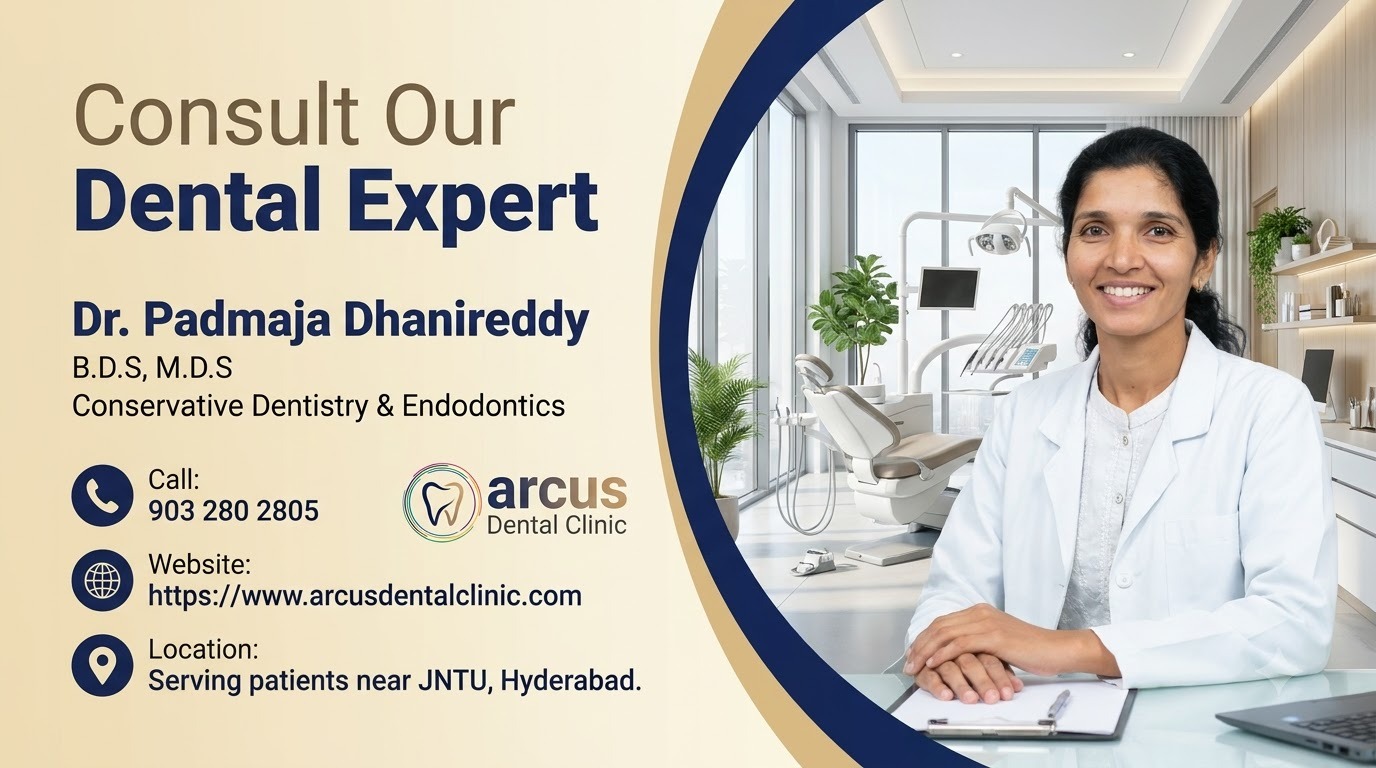
For patients in the KPHB area weighing up their options, Arcus Dental Clinic, run by Dr. Padmaja Dhanireddy near JNTU, tends to be chosen for fairly unglamorous reasons: thorough examinations, explanations that patients actually understand, and a willingness to tell someone a problem doesn’t need treating yet.
The clinic keeps detailed records across visits, which matters more than most people realise when treatment spans years. It also handles the full range of routine and restorative work, so patients aren’t sent elsewhere for standard procedures.
Final Thoughts
The best clinic isn’t the one with the longest equipment list or the most advertising. It’s the one that examines you carefully, explains clearly, charges fairly, and tells you the truth about what needs doing.
Those things are hard to advertise and easy to recognise once you’re sitting in the chair. If you’re weighing up clinics in KPHB, a single consultation will usually tell you everything the websites couldn’t. Book one, watch for the signals above, and trust what you observe.
Frequently Asked Questions
- How do I know if a dentist is recommending unnecessary treatment?
Ask what happens if you wait, and ask for the specific finding behind the recommendation. A genuine issue has a clear explanation; an unnecessary one usually doesn’t survive questioning. - Do more expensive clinics provide better dental treatment?
Not reliably. Price often reflects location, interiors, and marketing spend as much as clinical skill. Judge by examination quality and explanation instead. - Should I choose a general dentist or a specialist?
For routine care, fillings, cleanings, and most root canals, a good general dentist is appropriate. Complex implant work, orthodontics, or surgery may warrant a specialist referral. - Can I ask for my dental X-rays and records?
Yes, these belong to you. Any clinic that resists sharing your records is worth leaving. - Are online dental reviews reliable?
Partly. Look for detailed, specific reviews and repeated patterns rather than star averages. Clusters of short generic praise are worth treating with caution. - How many visits should a treatment plan take?
It depends entirely on the work needed. What matters is that the dentist explains the number of sittings upfront rather than adding visits as you go.