
Dental Hospital Near KPHB
Call: +91 9032802805
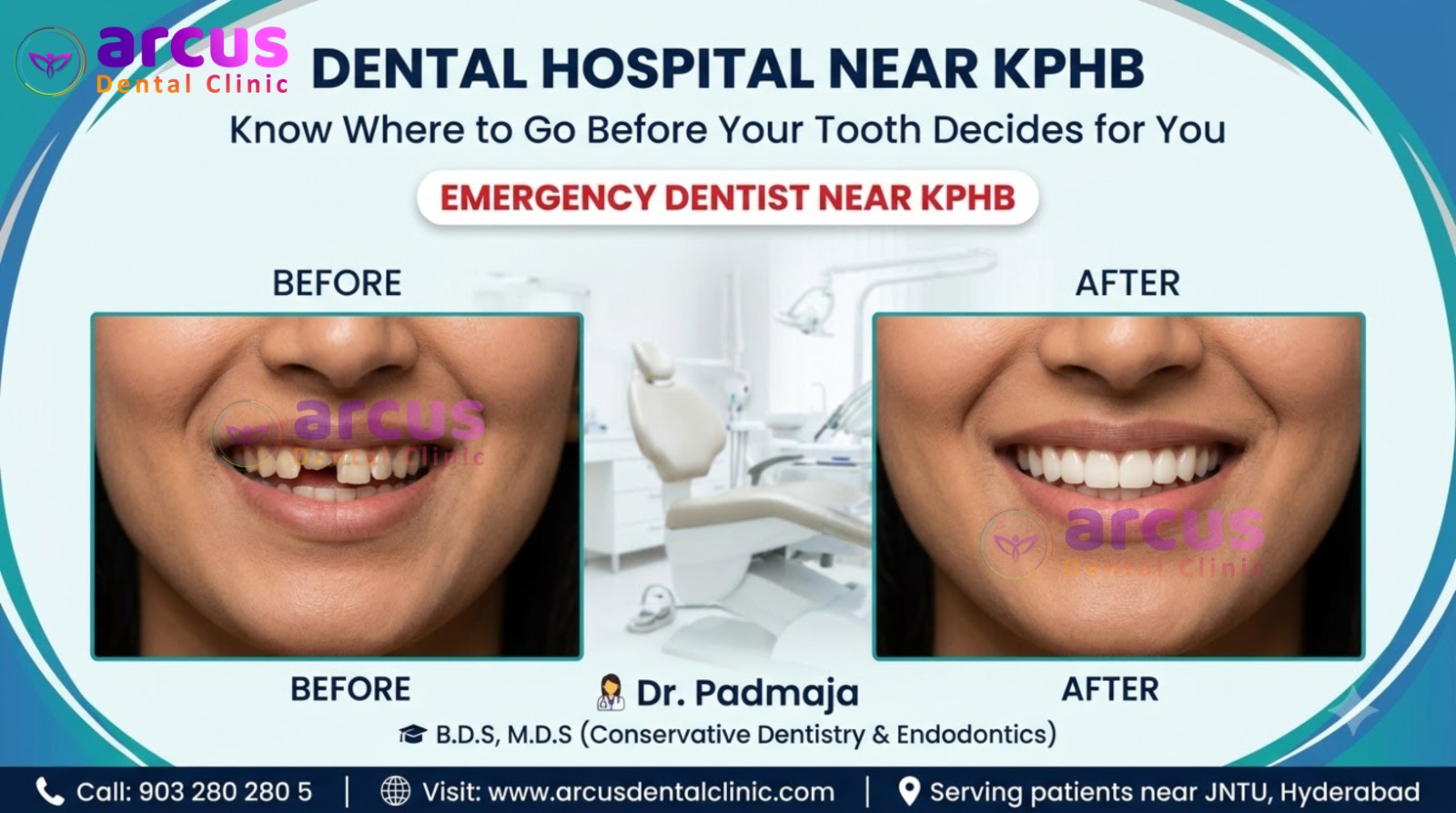
Dental Hospital Near KPHB: Know Where to Go Before Your Tooth Decides for You
Dental Hospital Near KPHB is not a search anyone makes on a calm day. You make it when a tooth cracks at dinner, when your child falls off a cycle, or when your face wakes up swollen at 6 a.m. Read this now, while nothing hurts, so you know exactly what to do later.
Emergency Dentist Near KPHB
Emergency Dentist Near KPHB is the other phrase you’ll type in a panic, and panic leads to bad choices. You click the first result. You forget what to ask. You lose the broken tooth piece in the car. A few minutes of preparation fixes all of that, and that’s all this page asks of you.
What Counts as a Dental Emergency
Not every dental problem is an emergency. Here’s a quick sort.
Get help the same day:
- A tooth knocked out or badly loosened
- A severe toothache that painkillers don’t touch
- Swelling in the gum, cheek or face
- A cracked or broken tooth with pain or sharp edges
- Bleeding that won’t stop after an extraction or injury
- A pimple-like bump on the gum with a bad taste or pus
- A lost crown or filling with strong sensitivity
Can usually wait a day or two:
- A small chip with no pain
- Mild sensitivity
- A lost filling that doesn’t hurt
- Slight gum bleeding while brushing
When in doubt, call and describe what’s happening. Dental teams can usually tell you in two minutes whether it’s urgent.
 Stop and Go to a Hospital Emergency Room If…
Some situations are bigger than a dental problem. Don’t wait for a dental appointment if you have:
- Swelling that’s spreading toward your eye, neck or throat
- Difficulty breathing or swallowing
- Fever along with facial swelling
- A heavy injury to the face or jaw, especially after an accident
- Bleeding that won’t stop even with firm pressure
These can be signs of a spreading infection or a serious injury. Go to a hospital emergency room right away, and let the dentist follow up after.
First Aid While You’re on the Way
What you do in the first thirty minutes matters. Here’s the short version.
A Tooth Knocked Out
- Pick it up by the crown (the white part), never the root.
- If it’s dirty, rinse it gently with milk or clean water for a few seconds. Don’t scrub.
- If it’s an adult tooth, try to place it back in the socket and hold it there gently.
- If that isn’t possible, keep it in a small container of cold milk or tucked inside your cheek (not for young children, who might swallow it).
- Get to a dentist as fast as you can. The first hour gives the best chance of saving it.
A knocked-out baby tooth should not be put back. Just see a dentist.
A Broken or Cracked Tooth
- Rinse your mouth with warm water
- Save any pieces you find
- Hold a cold compress on the outside of your cheek
- Cover a sharp edge with dental wax or sugar-free gum to protect your tongue
A Severe Toothache
- Rinse with warm salt water
- Gently floss around the tooth in case food is stuck
- Use a cold compress on your cheek
- Take a painkiller as the label or your doctor advises
A Lost Crown or Filling
- Keep the crown safe
- Clean it gently
- Use temporary dental cement from a pharmacy to hold it in place if you need to
- Don’t use household glue
Bleeding After an Extraction
- Press a clean gauze or folded cloth firmly on the spot
- Hold for 20 to 30 minutes without checking
- Avoid spitting, rinsing hard or using a straw
- Call your dentist if bleeding continues
What Not to Do
Some well-meant tricks make things worse.
- Don’t put aspirin or a crushed tablet on the gum. It can burn the tissue.
- Don’t squeeze or poke a swelling. You can spread infection.
- Don’t scrub a knocked-out tooth. You’ll damage the cells it needs to heal.
- Don’t ignore a toothache that suddenly stops. The nerve may have died, but the infection can continue.
- Don’t wait for it to “settle.” Swelling and pain that grow over days need attention.
How to Judge a Dental Hospital Near KPHB Before You Need One
The worst time to compare options is when you’re in pain. Do a little homework now. Here’s what to check.
- Does it handle urgent cases? Ask how emergency visits work and whether you can be seen the same day.
- What are the working hours? Hours differ a lot. Know them before you need them.
- Is there more than one specialist? For bigger problems, root canal, gum, surgery and jaw care under one roof saves time.
- Do they take X-rays on site? Quick imaging means a faster diagnosis.
- Is it clean? Sealed instruments, tidy rooms and visible hygiene steps matter more in an emergency.
- Do they discuss costs clearly? Urgent care is stressful enough without surprise bills.
- Is it easy to reach? Think about traffic. A place you can reach in twenty minutes beats a “better” one that takes an hour.
Save the number in your phone today. Seriously, do it now.
What Happens When You See an Emergency Dentist Near KPHB
Knowing what’s coming takes the fear out of it. Most urgent visits follow the same pattern.
- Quick questions. What happened, when it started, how bad the pain is, and whether you have any medical conditions.
- Pain relief first. The dentist numbs the area so you’re comfortable before anything else.
- A look and an X-ray. This shows what’s going on beneath the surface.
- Treatment for the immediate problem. This could be a temporary filling, draining an infection, starting a root canal, repairing or bonding a broken tooth, or removing a tooth that can’t be saved.
- A plan. Whatever happens at the first visit, the dentist should tell you what’s next, what to expect at home, and when to return.
Emergency treatment often fixes the urgent part first. The full repair may come at a follow-up visit. That’s normal.
Costs: Ask Before You Agree
Urgent care shouldn’t mean a blank cheque. Ask for an estimate before treatment starts. Ask what’s included, what follow-up will be needed, and whether any part can be done later.
A good dentist won’t mind these questions, even when you’re in pain.
Your Five-Minute Emergency Kit
You don’t need much. Keep these in one small box at home:
- Clean gauze or cotton pads
- A small container with a tight lid
- Dental wax
- Temporary dental cement from a pharmacy
- A cold pack or a clean cloth for ice
- Your dentist’s number saved in your phone, plus a written copy
Tell your family where the box lives. Emergencies often involve kids and older relatives who can’t think clearly in a rush.
Where Arcus Dental Clinic Fits In
Arcus Dental Clinic, led by Dr. Padmaja Dhanireddy, is near JNTU. It’s a clinic rather than a large hospital, and that’s worth knowing. For many urgent problems, such as a bad toothache, a broken tooth, a lost filling or early swelling, a clinic is exactly the right first stop.
If you’re hunting for an emergency dentist near KPHB, save the clinic’s number now and call ahead when something happens. A quick phone call lets the team tell you whether to come straight in or whether you need a bigger setup.
Final Thoughts
A dental emergency is stressful, but it’s much easier when you’ve done the thinking in advance. Know the difference between a clinic and a hospital. Know which problems can’t wait. Keep a small kit at home and the number saved in your phone.
Whether you end up at a dental hospital near KPHB or a neighbourhood clinic, the same rules apply: act fast, stay calm, and don’t let a small problem turn into a big one. And if you ever need an emergency dentist near KPHB, you’ll already know what to say, what to bring and where to go.
Frequently Asked Questions
- How quickly should I see a dentist after a tooth is knocked out?
As soon as possible, ideally within an hour. The sooner an adult tooth is placed back or protected, the better its chances of being saved. - Is a toothache always an emergency?
No. Mild or occasional pain can usually wait for a regular appointment. A severe toothache, swelling, fever or pain that stops you sleeping should be seen the same day. - Can I take a painkiller before I see the dentist?
A simple painkiller taken as per the label or your doctor’s advice can help for a short time. It only hides the pain, it doesn’t fix the cause, so you still need to be seen. - What if my face is swollen?
Swelling usually means an infection and needs same-day attention. If it spreads toward your eye or neck, or you have trouble breathing or swallowing, or you have a fever, go to a hospital emergency room immediately. - Do I need to call before going to a dental clinic?
It’s a good idea. A quick call lets the team confirm availability, tell you what to do on the way, and prepare for your arrival. - Will emergency treatment fix everything in one visit?
Not always. The first visit focuses on relieving pain and controlling the problem. A full repair, such as a crown or complete root canal, may need a follow-up.