
Best Dental Implants Clinic in KPHB
Best Dental Implants Clinic in KPHB: A Plain-Language Guide to Replacing Missing Teeth
Call: +91 9032802805
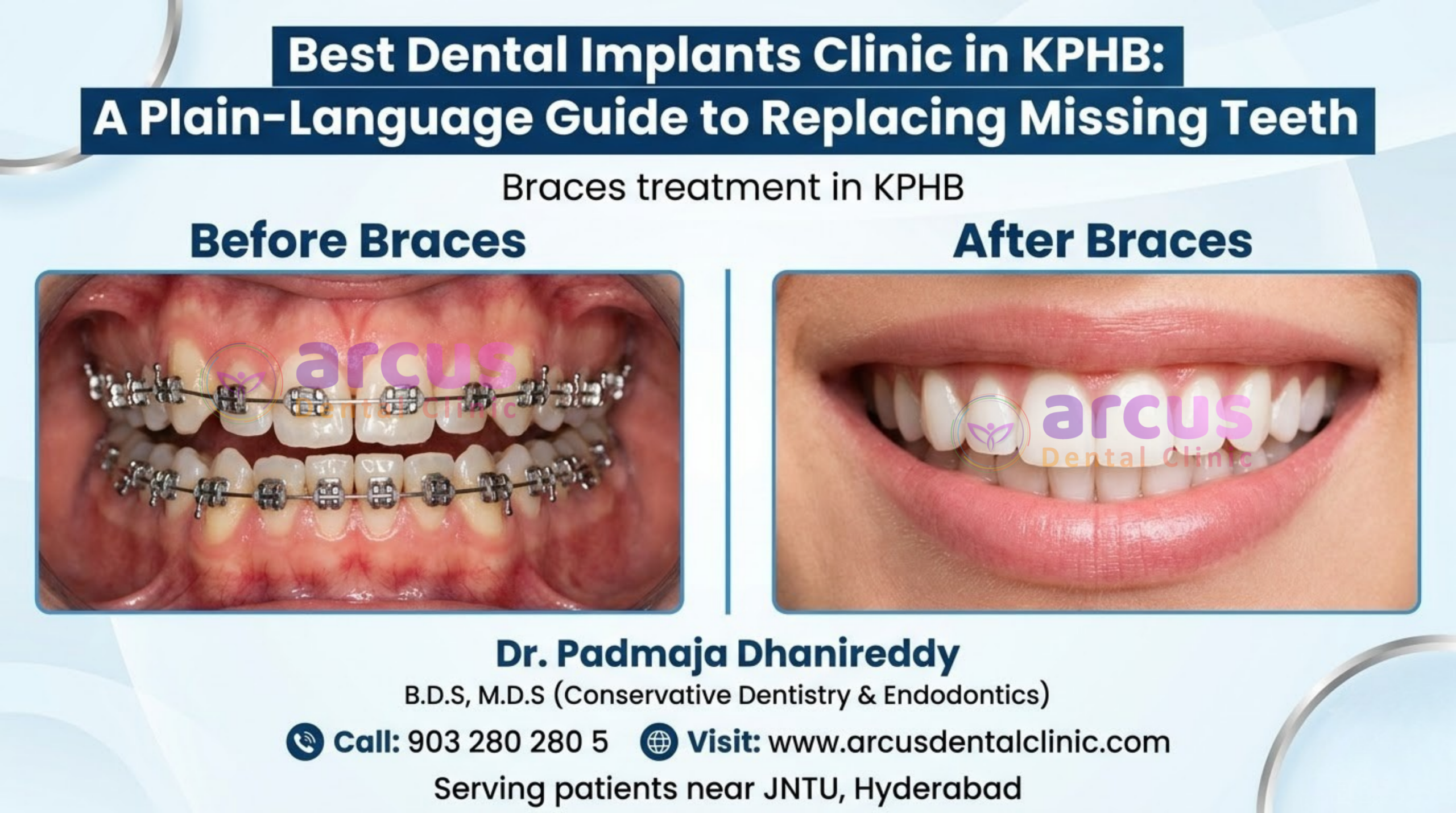
Best Dental Implants Clinic in KPHB is a search that usually starts with a lot of questions. How does an implant work? Does it hurt? How long does it take? What if I don’t have enough bone? This guide answers all of that in simple language, so you can walk into a consultation knowing what to ask.
Braces Treatment in KPHB
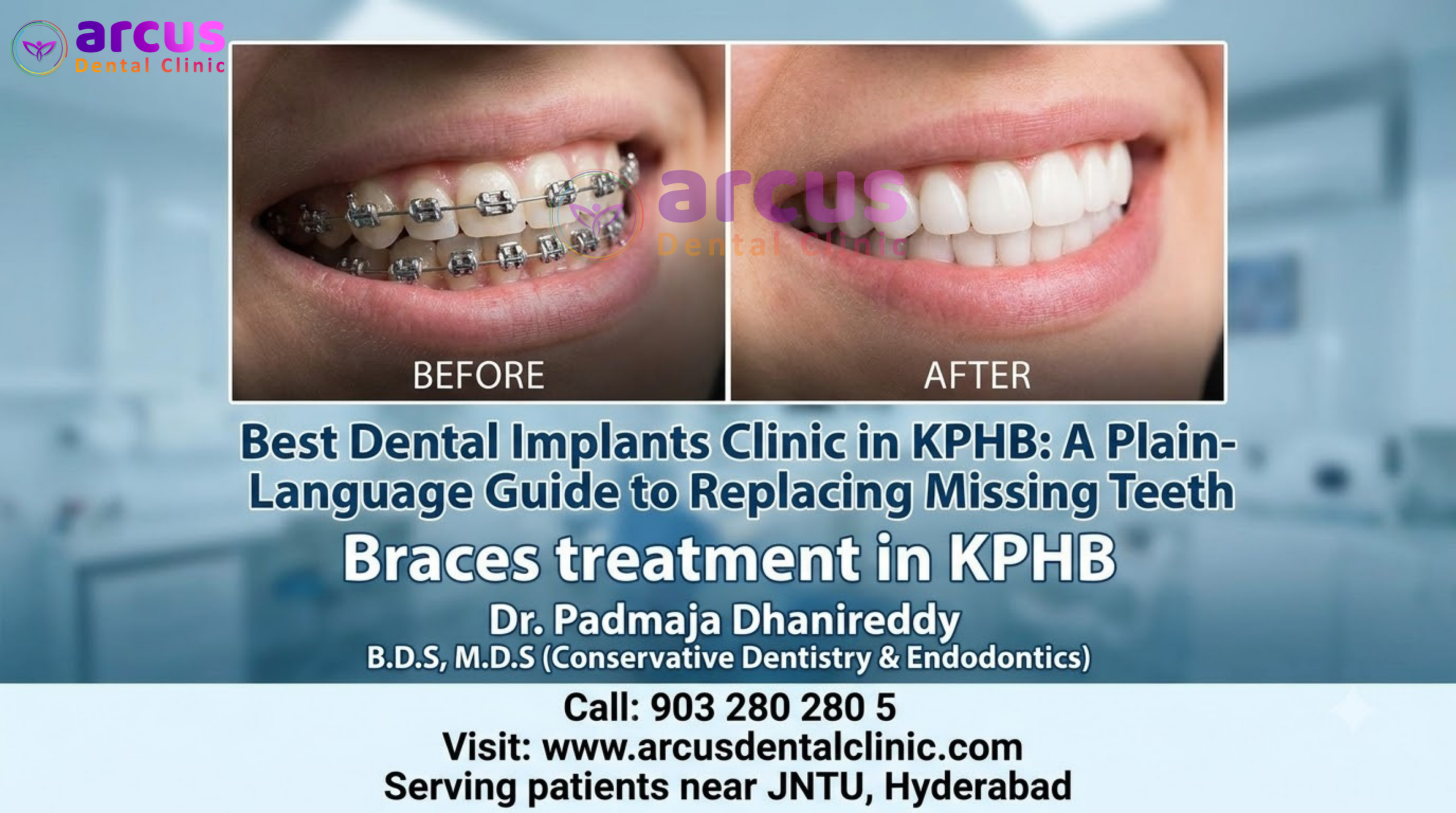
Braces Treatment In KPHB is the other half of this story. Replacing missing teeth and straightening crooked ones often go hand in hand, and the order you do them in matters. So after we cover implants, we’ll look at braces too, and at how the two can work together.
Why a Missing Tooth Is More Than Just a Gap
It’s easy to think a missing back tooth doesn’t matter because nobody sees it. But your mouth works as a team. When one player leaves, the rest adjust, and not always in a good way.
Over time, a missing tooth can lead to:
- Weaker chewing. You start favouring one side, and that side gets overworked.
- Drifting teeth. Neighbouring teeth lean into the space, which changes your bite.
- Overgrown opposite tooth. The tooth above or below the gap can slowly move toward it.
- Bone loss. The jawbone shrinks in the area where there’s no tooth root to keep it active.
- Harder cleaning. Tilted teeth create tight spots where food and plaque collect.
- Changes in speech or face shape. More noticeable when front teeth or several teeth are missing.
Replacing the tooth early keeps these problems from piling up.
What a Dental Implant Actually Is
A dental implant is a replacement for the root of a tooth, plus the tooth on top. It has three parts:
- The implant post. A small titanium screw placed in the jawbone. It acts as the new root.
- The abutment. A small connector that attaches to the post and sits at the gum line.
- The crown. The visible tooth, made to match the colour and shape of your natural teeth.
Titanium works well because the jawbone grows around it and holds it firmly in place. This bonding process is called osseointegration. It’s the reason an implant feels stable, unlike a loose denture.
Who Is a Good Candidate for Implants?
Most healthy adults can have implants, but a proper check-up decides it. Your dentist will look at a few things:
- Healthy gums. Gum disease needs to be treated first.
- Enough jawbone. The bone needs to be thick and strong enough to hold the post.
- Overall health. Conditions like uncontrolled diabetes can slow healing.
- Habits. Smoking and tobacco raise the risk of implant problems.
- Fully grown jaw. Implants are generally for adults whose jaw has finished growing.
If you don’t tick every box, that doesn’t always mean “no.” Gum treatment, bone building, or better diabetes control can sometimes get you there.
The Implant Journey, Step by Step
Many people are surprised that implants take months, not days. Knowing the timeline helps you plan.
Step 1: Consultation and Scans
The dentist examines your mouth and takes X-rays or a 3D scan. This shows the bone’s height, width, and position of nerves and sinuses. Together you decide on the plan.
Step 2: Preparing the Area
If the damaged tooth is still there, it’s removed. If gum disease or infection exists, it’s treated first. Sometimes the extraction site is allowed to heal for a few weeks or months before the implant goes in.
Step 3: Bone Grafting, If Needed
If the bone is too thin or soft, a bone graft may be done. This adds material to build up the area. Healing after a graft usually takes a few months before the implant can be placed.
Step 4: Placing the Implant
This is done under local anaesthesia. The gum is opened, a small space is made in the bone, and the post is placed. The gum is then closed or shaped around it. Most people describe this as less uncomfortable than they feared.
Step 5: Healing
The bone needs time to bond with the implant. This often takes around three to six months, depending on the person and the area. You can usually go about daily life during this time, with some food care.
Step 6: Abutment and Crown
Once the implant is stable, the abutment is attached. Impressions or scans are taken, and the crown is made. When it arrives, it’s fitted, checked for bite, and adjusted until it feels natural.
Implants vs. Bridges vs. Dentures
Implants aren’t the only way to replace a tooth. Each option has trade-offs.
Dental implant
- Stands on its own, no need to cut down neighbouring teeth
- Feels and functions closest to a natural tooth
- Helps keep the jawbone active
- Takes longer and usually costs more upfront
Dental bridge
- Faster, often completed in a few weeks
- Needs the neighbouring teeth to be shaped down to hold it
- Doesn’t stop bone loss under the missing tooth
Removable denture
- Usually the most budget-friendly choice
- Can be used for one tooth or a full set
- May feel bulky or move while eating or speaking
- Needs daily removal and cleaning
The best option depends on your mouth, your health, how many teeth are missing, and your budget. A good dentist will explain all of them, not just one.
How Long Do Implants Last?
With good care, implants can last many years, and often decades. The post itself is very durable. The crown on top may need replacing after a long time due to normal wear.
What matters most is how you look after them. An implant can’t get cavities, but the gum and bone around it can still get infected. That’s why daily cleaning and regular check-ups are part of the deal.
Taking Care of Your Implant
- Brush twice a day and clean around the implant gently
- Floss or use interdental brushes daily
- Avoid smoking, as it harms healing and long-term stability
- Don’t bite hard objects like ice or bottle caps
- See your dentist every six months for a check and cleaning
- Tell your dentist if the implant feels loose or the gum looks swollen
How to Choose the Best Dental Implants Clinic in KPHB
Picking the best dental implants clinic in KPHB matters more than almost any other dental decision. An implant is a long-term investment, and a poor job is hard to undo. Here’s what to look for.
- A full assessment first. Scans, a gum check, and a medical history should come before any treatment talk.
- A written plan. It should list the steps, the timeline, and the cost.
- Clear information on the implant system. Ask which brand and type will be used.
- Honesty about your options. If a bridge or denture suits you better, they should say so.
- A clean, organised setup. Sterile tools and a tidy surgical area are non-negotiable.
- Follow-up care. Healing checks and long-term maintenance should be part of the plan.
- Realistic promises. Be wary of “one day, no problem” claims for every case.
Braces Treatment in KPHB: Not Just for Teenagers
Now let’s talk about the other side of a healthy smile: alignment. Braces treatment in KPHB is no longer only a teenage thing. More adults are getting their teeth straightened, and for good reasons.
Crooked or crowded teeth aren’t only about looks. They can cause:
- Trouble cleaning between teeth, which raises the risk of cavities and gum problems
- Uneven wear on certain teeth
- Difficulty biting or chewing properly
- Jaw discomfort in some bite problems
- Lower confidence when smiling
Braces slowly apply gentle pressure to move teeth into better positions. The bone around the teeth adjusts as they move, and that’s why the process takes time.
What the First Few Weeks Feel Like
Braces feel strange at first. That’s normal. Here’s what most people go through:
- Soreness for a few days after the braces go on and after each adjustment
- Lip and cheek irritation until your mouth gets used to the brackets. Orthodontic wax can help.
- Slight speech changes that usually settle within days
- Softer food choices during the sore days, such as khichdi, soups, and idli
Eating and Cleaning With Braces
Cleaning takes more effort with braces, and this part decides how your teeth look when they come off.
- Brush after meals if you can, and always morning and night
- Use a small interdental brush or floss threader to clean around brackets
- Avoid very hard or sticky foods that can break brackets
- Cut down on sugary snacks and fizzy drinks
- Keep up with regular cleanings during treatment
Teeth that are poorly cleaned during braces can come out straight but marked with white spots. It’s worth taking seriously.
Don’t Skip the Retainer
When braces come off, your teeth are straight but not fully settled. They tend to drift back toward their old positions. A retainer holds them in place while the bone and gum tissue adapt.
Your dentist will tell you how long to wear it and when. Many people wear retainers at night for a long time. Skipping them is the most common reason a straight smile slowly shifts.
When Braces and Implants Work Together
Here’s where both parts of this guide connect. Sometimes a missing tooth has let neighbouring teeth tilt into the gap. If an implant is placed without fixing that, there may not be enough room, or the crown may look off.
In these cases, braces can move the teeth back to create the right space first. Then the implant goes in at the correct position. This takes more time, but it often gives a better, more natural result.
Not everyone needs both. But if you have missing teeth and crooked ones, ask your dentist about the right order of treatment.
Where Arcus Dental Clinic Fits In
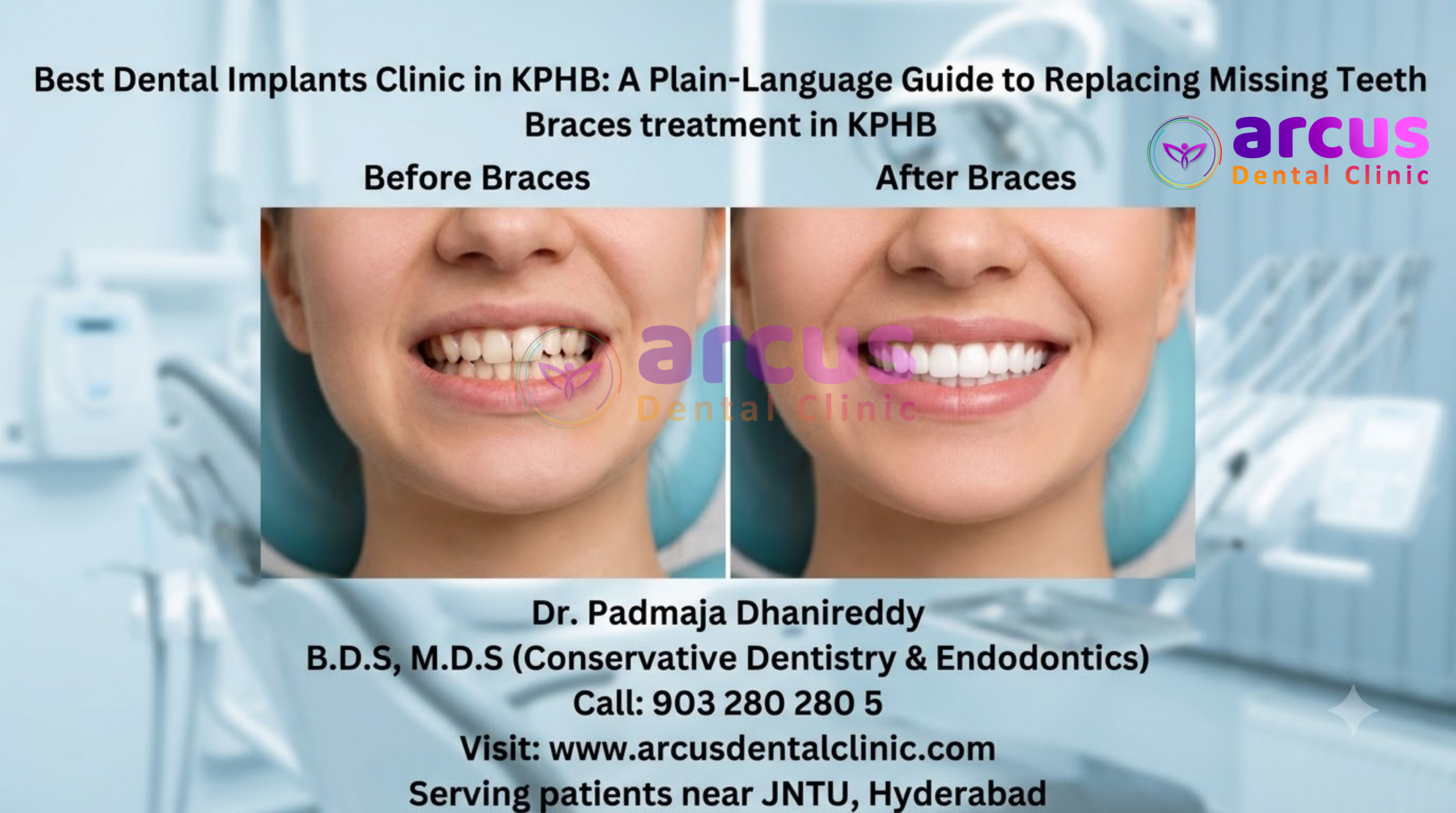
For families and working people around KPHB, Arcus Dental Clinic, led by Dr. Padmaja Dhanireddy near JNTU, offers a full range of dental care under one roof. The approach starts with a careful look at your mouth and a straightforward explanation of what’s needed.
Whether you’re thinking about replacing a missing tooth or straightening your smile, the first step is the same: a consultation where your questions get real answers.
Final Thoughts
Missing or crooked teeth don’t fix themselves, and they tend to cause more trouble the longer they’re left. Choosing the best dental implants clinic in KPHB comes down to honest advice, careful planning, and good aftercare. The same applies to braces treatment in KPHB, where patience and good habits matter just as much as the treatment itself.
If you’ve been putting off a decision about a gap or a crooked smile, a simple consultation is a good place to start. It costs you little, and it gives you a clear plan to think about.
Frequently Asked Questions
- How long does the whole dental implant process take?
Usually several months from start to finish, because the bone needs time to bond with the implant. Cases needing extractions or bone grafts take longer. - Is getting a dental implant painful?
The procedure is done under local anaesthesia, so you shouldn’t feel pain during it. Mild soreness and swelling for a few days afterward is common and manageable. - Can I get an implant if I have bone loss?
Often yes, but you may need a bone graft first to build up the area. Your dentist will check your bone with an X-ray or scan. - How much do braces cost, and what affects the price?
The cost depends on the type of braces, how complex your case is, and how long treatment takes. Ask for a full estimate at your consultation, including follow-up visits and retainers. - Are braces only for children and teenagers?
No. Adults can get braces too, as long as their gums and bone are healthy. Many adults choose braces or clear aligners for comfort, chewing, and appearance. - Do I have to wear a retainer after braces?
Yes. Teeth tend to move back toward their old positions after braces come off. A retainer keeps them in place while everything settles.