
Best Root Canal Dentist in KPHB
Call: +91 9032802805
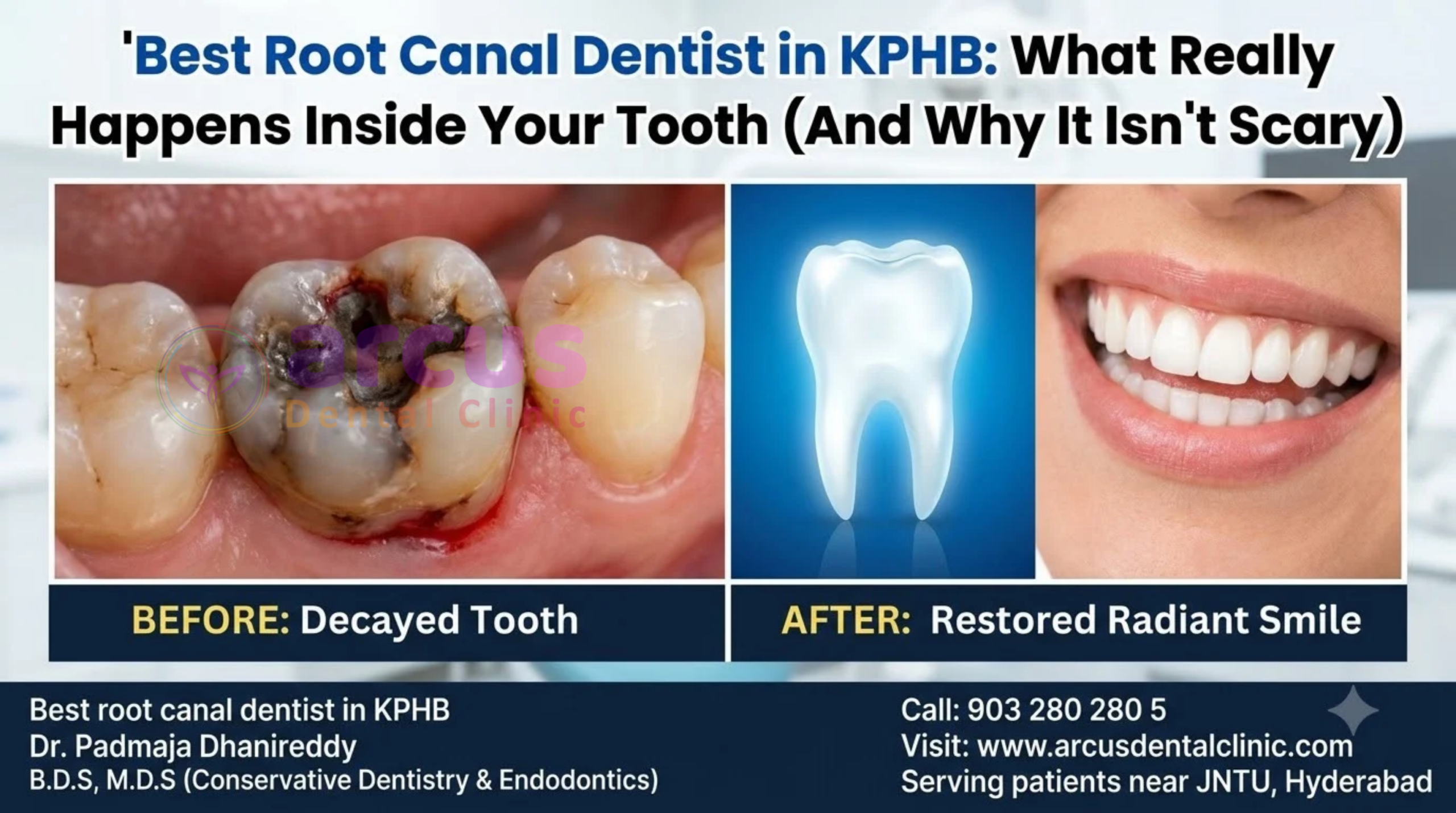
Best Root Canal Dentist in KPHB: What Really Happens Inside Your Tooth (And Why It Isn’t Scary)
Best Root Canal Dentist in KPHB is a search many people make when a toothache just won’t go away. If that’s you, take a breath. A root canal is done to stop your pain, not to cause it. This guide walks through every step in plain words, so nothing in the dentist’s chair feels like a surprise.
Dental Implants in KPHB
Dental Implants in KPHB often show up in the same searches, and that makes sense. When a tooth is too damaged to save, an implant is usually the next option people hear about. But a good dentist always tries to save your natural tooth first. So we’ll cover both: how a root canal rescues a tooth, and what happens when rescue isn’t possible.
First, What Is a “Root Canal” Anyway?
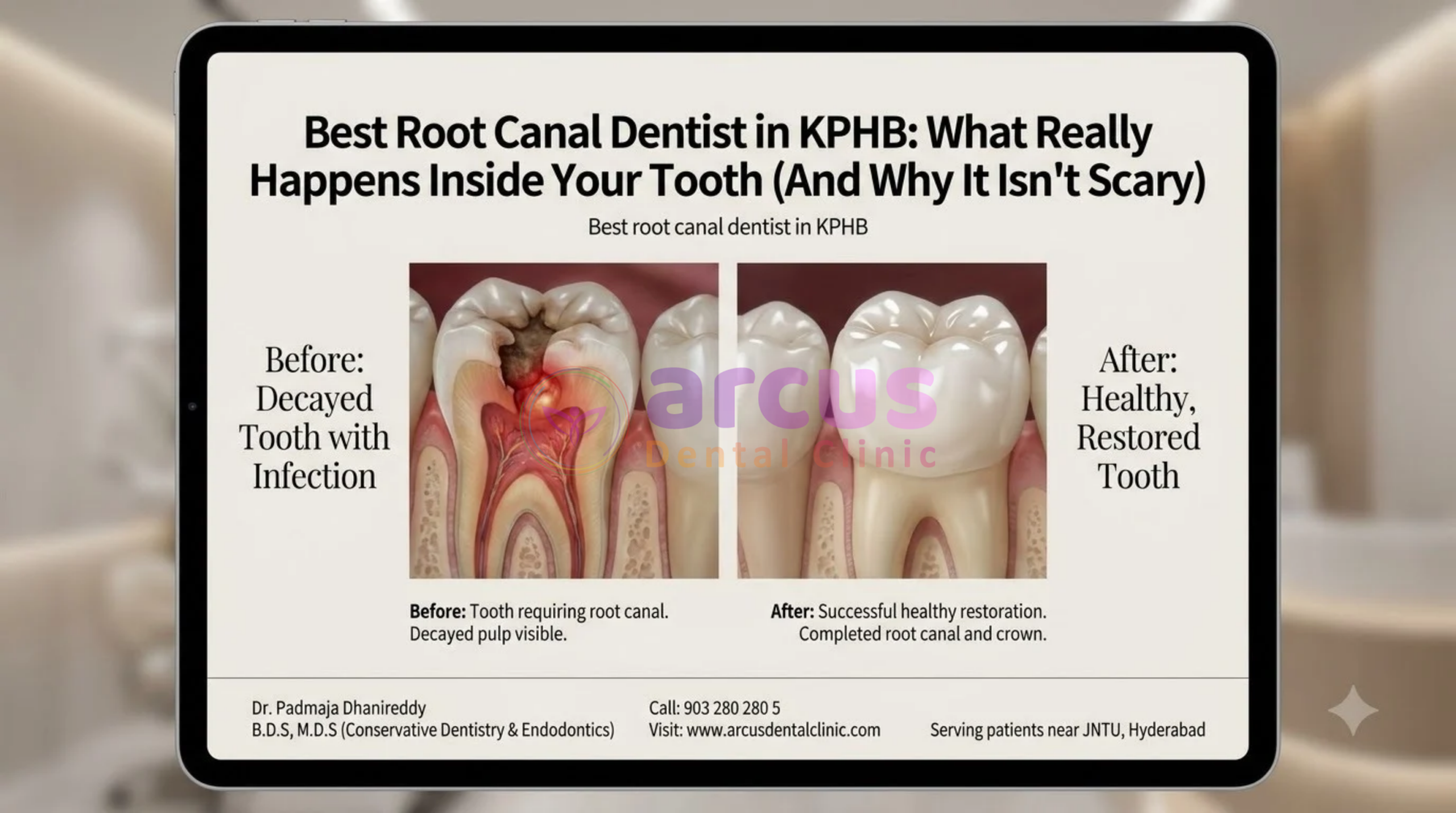
Inside every tooth is a soft center called the pulp. It holds nerves and tiny blood vessels. The pulp runs down through narrow channels in the tooth’s roots. Those channels are the “root canals.”
When bacteria reach the pulp, it gets infected and inflamed. This can happen through a deep cavity, a crack, a chipped tooth, or repeated dental work on the same tooth. The pulp cannot heal itself once it’s badly infected.
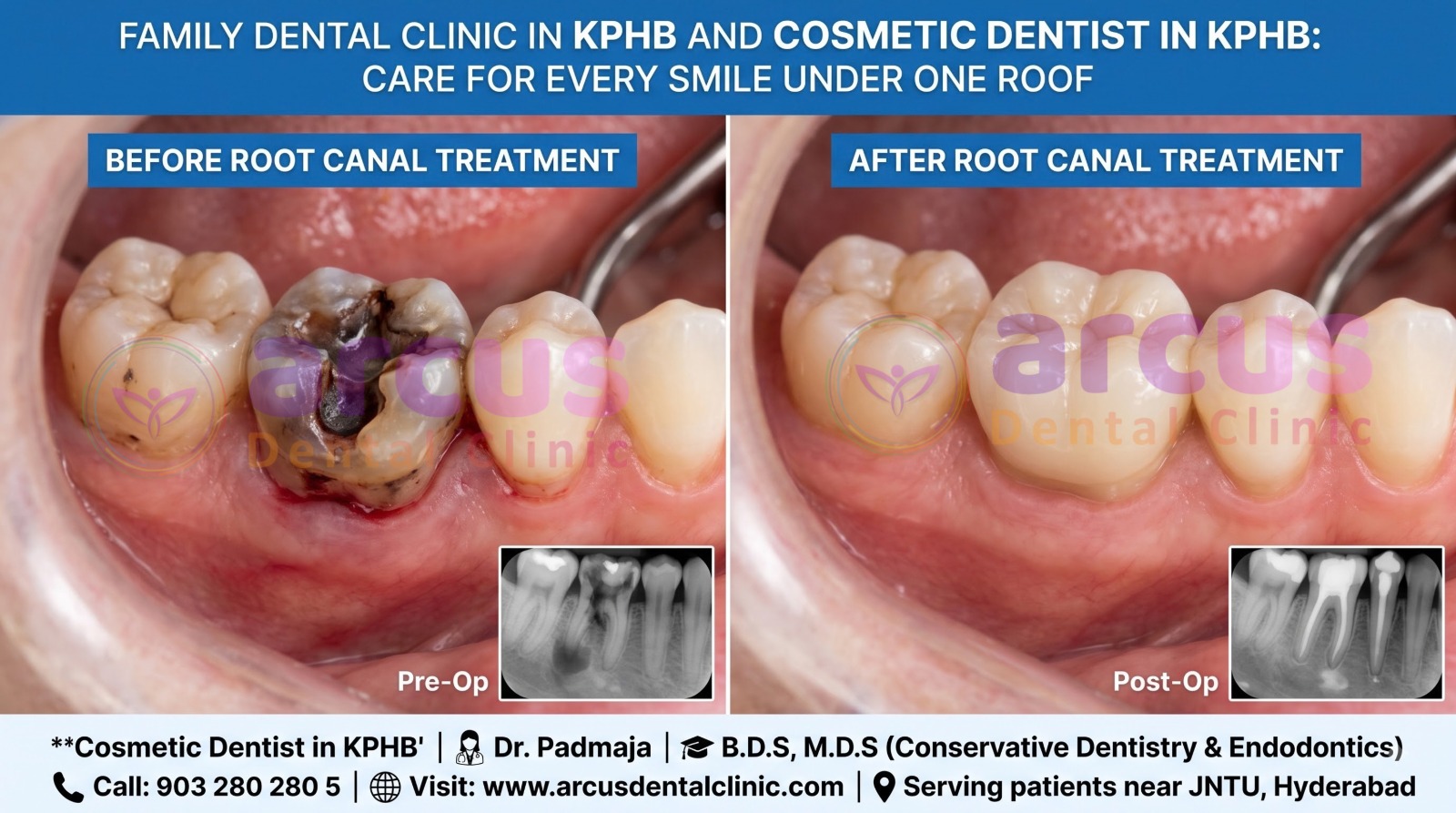
Root canal treatment removes the infected pulp. The dentist cleans the inside of the tooth, disinfects it, and seals it. The outer tooth stays in your mouth, and you keep chewing with it.
Think of a leaking pipe inside a wall. You don’t knock the house down. You fix the pipe and close up the wall. A root canal works the same way.
Signs Your Tooth May Need a Root Canal
Only a dentist can confirm this with an examination and an X-ray. But these signs are worth taking seriously:
- Pain when you bite down or press on the tooth
- Sensitivity to hot or cold that lingers after the drink is gone
- A throbbing ache, especially at night
- Swelling or tenderness in the gum near one tooth
- A small pimple-like bump on the gum
- A tooth that has turned darker than the ones next to it
- A bad taste in your mouth that keeps coming back
The Pain That Suddenly Stops
This one fools a lot of people. A tooth hurts for days, then the pain just disappears. It feels like good news.
Often it isn’t. The nerve inside may have died, which is why the pain stopped. The infection can still be there, quietly spreading. If a bad toothache vanishes on its own, still get the tooth checked.
What Happens Step by Step
Knowing the steps takes away a lot of the fear. Here’s what a typical root canal looks like.
- Examination and X-ray. The dentist checks the tooth and takes an X-ray to see the roots and the surrounding bone.
- A local anaesthetic is given. The dentist waits until the area is fully numb before going further.
- Keeping the tooth clean and dry. A small rubber sheet is placed around the tooth. This keeps saliva and bacteria out while the dentist works.
- Opening the tooth. A small opening is made on the top of the tooth to reach the pulp.
- Cleaning the canals. The infected pulp is removed. The narrow canals are cleaned and shaped using fine tools.
- The inside is rinsed with antibacterial solutions to clear out remaining bacteria.
- Filling and sealing. The cleaned canals are filled with a special material and sealed so bacteria can’t get back in.
- Protecting the tooth. The opening is closed with a filling. A crown is usually planned afterward.
You stay awake through all of it. If you ever feel pain, you can raise your hand, and a good dentist will stop and numb you more.
How Many Visits and How Long Does It Take?
It depends on the tooth. A front tooth with one root and a simple canal can sometimes be finished in a single visit. Back teeth have more roots and more complicated canals, so they often need more time.
An infected tooth with swelling may need two or more visits. In that case, the dentist cleans the tooth first, places a medicine inside, and completes the treatment at the next sitting.
Each visit usually lasts somewhere between 45 and 90 minutes. Your dentist should tell you upfront how many visits to expect, so you can plan your week.
Will It Hurt Afterward?
Once the numbness wears off, the tooth may feel tender for a couple of days. Chewing may feel strange. This is because the tissue around the root has been irritated by the infection and the treatment.
A simple painkiller, taken the way your dentist advises, is usually enough. A few small things help:
- Avoid chewing hard food on that side until the tooth feels normal
- Don’t skip the follow-up visit
- Keep brushing and flossing gently around the area
Call your dentist if you notice severe pain, facial swelling, or a fever. Those are not part of normal healing.
Why a Crown Usually Follows
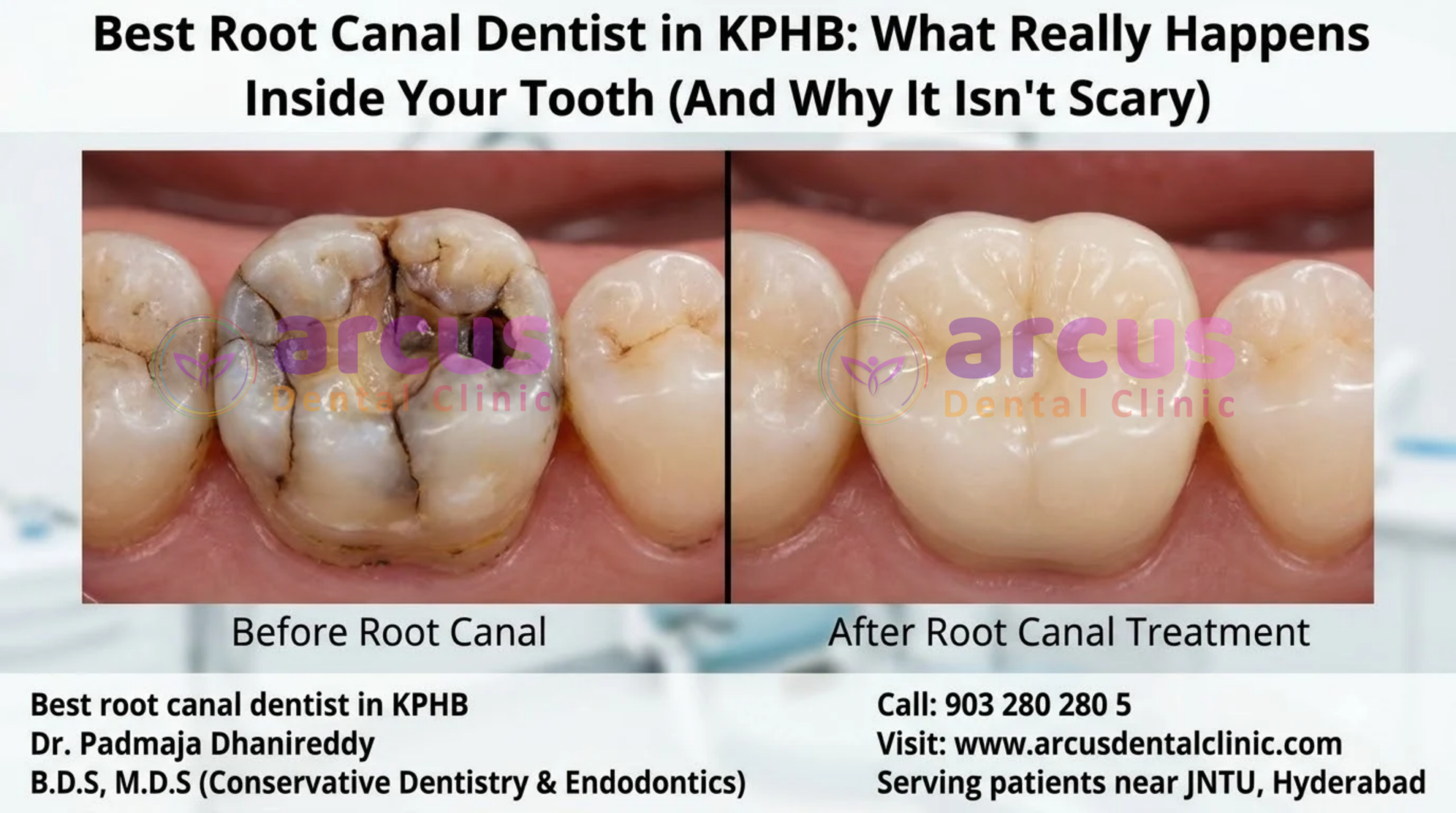
A tooth that needed a root canal has usually lost a lot of its structure. Decay or a crack did the damage first. Then the dentist had to make an opening to clean the inside.
Back teeth do the hardest chewing work. Without a crown, a treated back tooth can crack under pressure, sometimes badly enough that it can’t be saved.
A crown fits over the tooth like a cap. It protects what’s left and brings back normal chewing strength. Your dentist will tell you whether your tooth needs one and how soon. Putting it off for months is a common mistake.
What Happens If You Wait
Many people delay treatment hoping the problem will go away. Infected teeth don’t heal on their own.
Left alone, the infection can move out through the tip of the root into the jawbone. This forms an abscess, a pocket of pus. It can cause swelling in the face, a fever, and strong pain. In serious cases, the infection spreads to other areas, and that needs urgent care.
By that point, the tooth may be impossible to save. Treatment also becomes longer and more complicated. Acting early is almost always simpler, shorter, and easier on you.
How to Pick the Best Root Canal Dentist in KPHB
Choosing the best root canal dentist in KPHB is not about who has the fanciest website. It’s about how you’re treated before, during, and after the procedure. Here’s a simple checklist.
- They show you the X-ray. You should see what the dentist sees and understand why the tooth needs treatment.
- They explain the plan clearly. Number of visits, the crown, and costs should all be discussed before you start.
- They numb the area properly. A good dentist waits and checks that you’re comfortable.
- They work in a clean setup. Sterilised instruments and a rubber dam for isolation are signs of care.
- They don’t rush. Root canal work needs patience, and short cuts show later.
- They’re honest about difficult cases. Some teeth are complicated. A good dentist will tell you if a specialist referral is better for you.
- They follow up. A quick check after the treatment shows they care about the outcome.
When a Tooth Can’t Be Saved: Dental Implants in KPHB
Sometimes, even with the best care, a tooth can’t be saved. This can happen when:
- A crack runs deep below the gum line
- Decay has destroyed too much of the tooth
- A treated tooth fractures badly
- Advanced gum disease has loosened the tooth
In these cases, the tooth is removed. Then the question becomes how to replace it. Dental implants in KPHB are one of the most popular answers.
An implant is a small titanium post placed in the jawbone. It acts like an artificial tooth root. After the bone heals around it, a crown is attached on top. The result looks, feels, and works much like a natural tooth.
Implants aren’t right for everyone. They need healthy gums and enough bone, and the process takes several months from start to finish. Bridges and dentures are other options. Your dentist can explain which one suits your mouth, your health, and your budget.
Looking After a Root Canal Treated Tooth
A treated tooth can last for many years, sometimes for life, if you care for it properly. The treatment saves the tooth, but it doesn’t make it immune to new decay.
- Brush twice a day and floss daily
- Get the crown placed on time
- Avoid chewing ice, hard sweets, or pen caps
- Visit your dentist every six months
- Get any pain, swelling, or bite changes checked quickly
Where Arcus Dental Clinic Fits In
For people around KPHB, Arcus Dental Clinic, led by Dr. Padmaja Dhanireddy near JNTU, offers root canal treatment as part of its everyday dental care. The approach is built around explaining things first: what’s wrong with the tooth, what the treatment involves, and what to expect afterward.
Patients who are nervous about the procedure can talk through their worries before anything starts. That conversation matters more than most people think.
Final Thoughts
A root canal has a scary reputation it doesn’t deserve. The treatment is there to end your pain and keep your own tooth in your mouth. The real danger is waiting too long.
If you’re looking for the best root canal dentist in KPHB, look for someone who explains, listens, and doesn’t rush. And if a tooth ever can’t be saved, know that options like dental implants in KPHB exist to bring back a full, comfortable bite. If a tooth has been bothering you, book a check-up. One visit can tell you exactly where you stand.
Frequently Asked Questions
- Is a root canal painful?
The area is numbed before treatment, so most people feel pressure rather than pain. Mild soreness for a few days afterward is normal and can be managed with a simple painkiller. - How long does a root canal take?
A simple case may be completed in one visit of about an hour. Complicated or infected teeth often need two or more visits. - Do I need a crown after a root canal?
Usually yes, especially for back teeth. A crown protects the weakened tooth from cracking under chewing pressure. - How long does a root canal treated tooth last?
With good care and a proper crown, a treated tooth can last many years, often for life. Regular brushing, flossing, and dental check-ups make the biggest difference. - What happens if I don’t get a root canal?
The infection can spread to the jawbone, causing an abscess, swelling, and strong pain. The tooth may eventually need to be removed. - When is a dental implant better than a root canal?
When the tooth is too damaged to be saved, for example with a deep crack or severe decay, removal followed by an implant may be recommended. Your dentist can confirm this after an examination and X-ray.