

Experienced Dentist in KPHB
Call: +91 9032802805
Experienced Dentist in KPHB: Why Dental Needs Change at Every Age
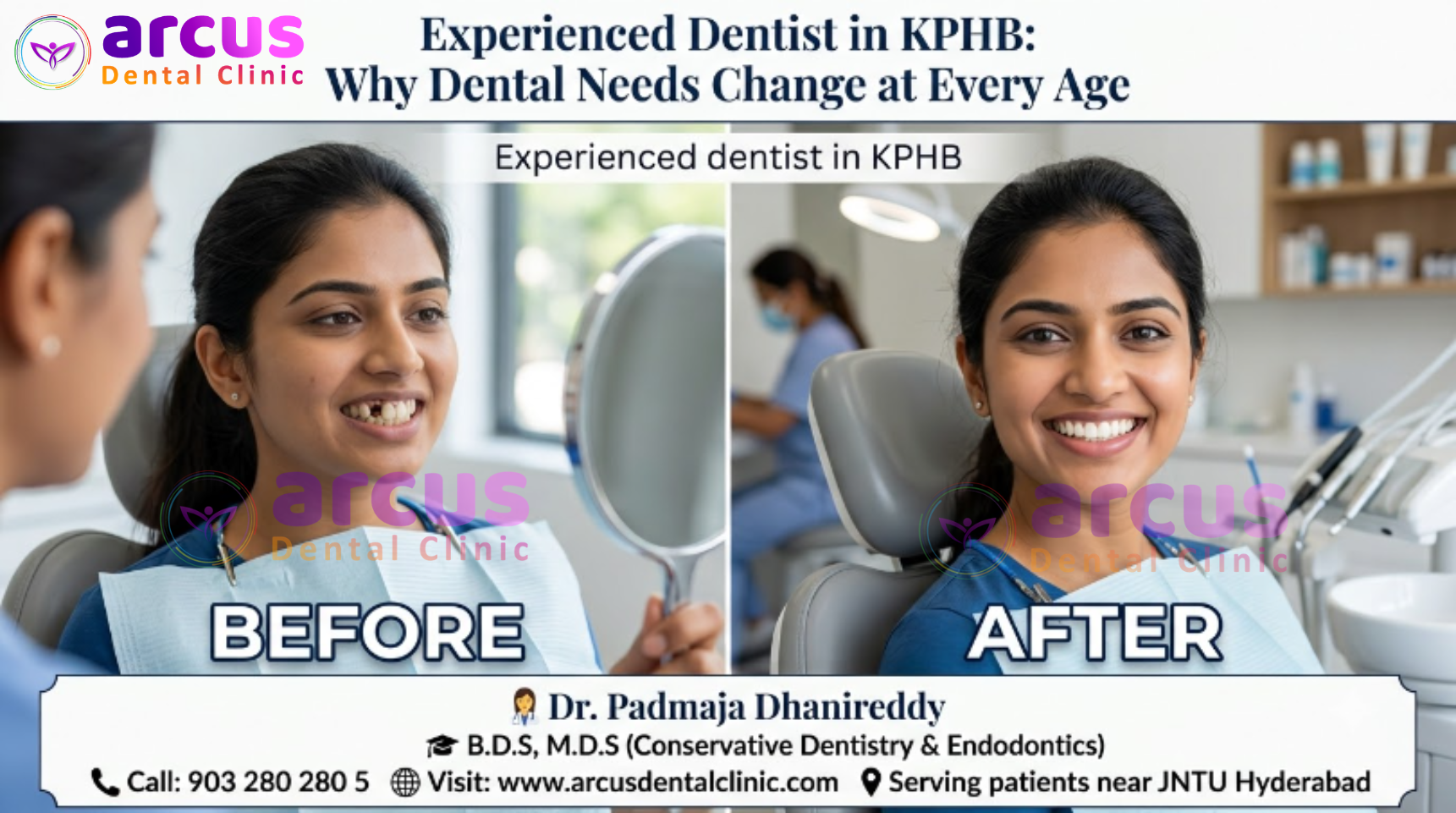
Your teeth at six, twenty-six, and sixty-six need completely different things. Most people don’t think about that until something goes wrong at one of those stages.
Experienced Dentist in KPHB is worth searching for precisely because experience is what allows a dentist to handle that full range. Knowing how a child’s jaw develops, why a thirty-year-old is suddenly grinding their teeth, and how to manage gum recession in a seventy-year-old are three genuinely different skills.
Family Dentist in KPHB
Family Dentist in KPHB searches usually come from households that have realised something practical: managing four people’s dental care across three different clinics is exhausting. One clinic that knows everyone’s history is simpler, cheaper, and catches more. This blog walks through what dental care actually looks like at each life stage, and why continuity matters more than most people expect.
Dental Care From Infancy to Eighteen
Childhood dental care isn’t just smaller adult dentistry. The priorities are completely different.
Ages 1–3: Establishing the Habit
The first visit should happen around the first birthday or when the first teeth appear. Almost nothing clinical happens at this age. The point is familiarity, so the dental chair never becomes frightening.
This is also when parents learn the things nobody tells them: that bottle feeding overnight causes decay, that baby teeth need brushing, and that fluoride amounts matter at this age.
Ages 4–8: Cavities and First Losses
This is peak cavity age. Diets get sweeter, brushing gets sloppier, and molars have grooves that trap food.
An experienced dentist watches for early decay in baby teeth, which matters more than parents assume. Baby teeth guide adult teeth into position. Losing one early can shift everything that follows.
Ages 9–13: Alignment Becomes Visible
As adult teeth come in, crowding and bite issues become apparent. This is the window where early orthodontic guidance is most effective, because the jaw is still developing.
Ages 14–18: Wisdom Teeth and Habits
Wisdom teeth start appearing. So do sports injuries, thumb-sucking consequences, and the effects of years of fizzy drinks. Teenagers also need honest conversations about smoking and oral hygiene that land better from a dentist than a parent.
Dental Care in Your Twenties and Thirties
This is the decade most people neglect their teeth, usually because nothing hurts and life is busy.
The Neglect Window
Routine cleanings get skipped for years. Small cavities go unnoticed. Then at thirty-four something finally hurts, and the accumulated problems all surface at once.
Grinding and Clenching
Stress-related grinding, called bruxism, peaks in these decades. It wears down enamel, cracks fillings, and causes jaw pain and headaches that people rarely connect to their teeth.
An experienced dentist spots the wear patterns before the damage becomes structural, which usually means a simple night guard instead of multiple crowns later.
Wisdom Tooth Complications
Partially erupted wisdom teeth trap bacteria and cause repeated infections. These often need addressing in this period.
Cosmetic Interest Begins
Whitening, alignment correction, and chipped-tooth repair become common requests. The important thing here is a dentist who checks underlying health first rather than jumping straight to cosmetic work.
Dental Care in Your Forties and Fifties
The focus shifts noticeably here, from cavities to gums and structural wear.
Gum Disease Becomes the Main Threat
Cavities are still possible, but gum disease becomes the leading cause of tooth loss in this age group. It progresses slowly and painlessly, which is exactly why it’s dangerous.
Early signs are easy to dismiss: slight bleeding, mild recession, occasional sensitivity. Caught early it’s manageable. Caught late it means bone loss.
Old Dental Work Starts Failing
Fillings placed twenty years ago crack. Crowns loosen. This is normal, not negligence, but it needs monitoring rather than waiting for something to break.
Medical Conditions Start Interacting
Diabetes, blood pressure medication, and heart conditions all affect oral health. Certain medications cause dry mouth, which dramatically increases decay risk. A dentist who reviews your full medical history catches these connections.
Dental Care for Seniors
Care in later years is mostly about preservation and comfort.
- Gum recession exposes tooth roots, which are more sensitive and decay faster than enamel
- Dry mouth from medications requires specific management
- Denture fit changes as the jawbone reshapes, needing periodic adjustment
- Reduced dexterity can make brushing and flossing harder, requiring adapted techniques or tools
- Oral cancer screening becomes more important and should be part of routine checkups
This is where experience genuinely shows. Treating a seventy-year-old with existing bridgework, thinning bone, and three medications is a judgment-heavy task.
Why One Clinic for the Whole Family Actually Helps
The convenience argument is obvious. The clinical arguments are more interesting.
Patterns Become Visible Across Relatives
Tendencies toward crowding, enamel weakness, or gum sensitivity often run in families. A dentist treating parents and children sees these connections and can watch for them early.
Children Learn From Watching Adults
A child who sees a parent sit calmly through a cleaning at the same clinic is markedly less anxious about their own appointments.
Scheduling Is Genuinely Easier
Back-to-back family appointments in one trip beats three separate outings across the week.
Records Stay Together
Treatment history, X-rays, allergies, and medical notes in one place means faster decisions and fewer repeated diagnostics.
Trust Carries Across Generations
Families who’ve used the same dentist for fifteen years don’t shop around when something goes wrong. They already know who to call.
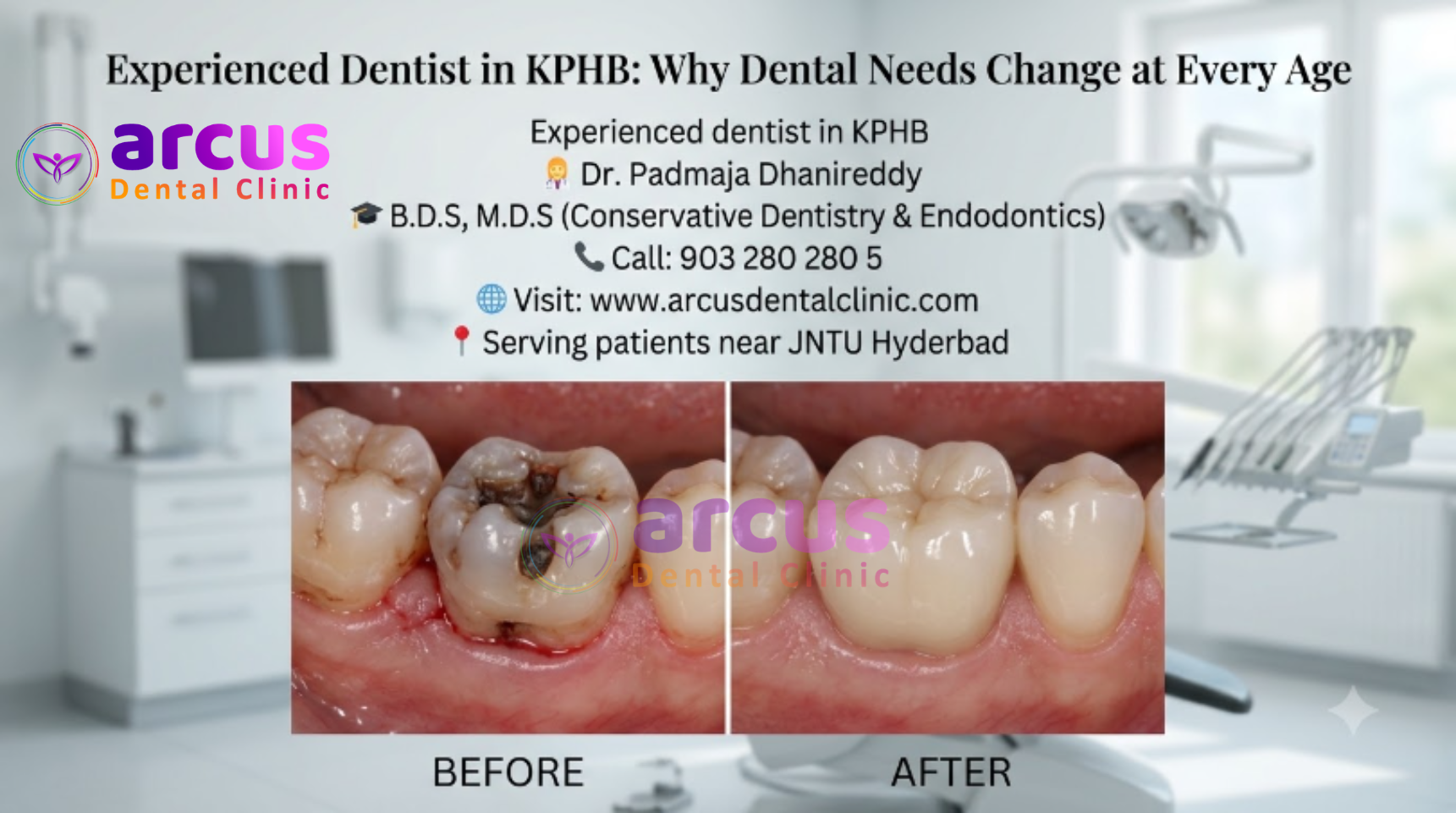
What Experience Actually Changes in Practice
Experience isn’t about years on a certificate. It shows up in specific, practical ways.
- Recognising the unusual case. Knowing when something doesn’t fit the normal pattern and needs a closer look.
- Judging when to save versus extract. This decision is rarely obvious and gets made better with volume.
- Handling complications calmly. Procedures occasionally go sideways. Experience is what keeps that manageable.
- Managing anxious patients. Reading discomfort and adjusting pace is a learned skill.
- Knowing what will actually last. Predicting how a treatment holds up over a decade requires having watched treatments over decades.
Where Arcus Dental Clinic Fits In
For families in and around KPHB, Arcus Dental Clinic, led by Dr. Padmaja Dhanireddy near JNTU, handles care across all of these life stages under one roof, from a toddler’s first familiarisation visit through to denture management for older patients.
That continuity is the practical benefit. Records stay in one place, family patterns get noticed, and children grow up without developing the dental anxiety that keeps so many adults away.
Final Thoughts
Good dental care isn’t a single procedure done well. It’s decades of small, timely decisions made by someone who knows your history and recognises what’s normal for you.
That’s genuinely hard to get from clinic-hopping. If your family’s dental care is currently scattered across different places, consolidating it is one of the simpler improvements you can make. A single consultation is enough to get everyone’s history started in one place.
Frequently Asked Questions
- At what age should a child’s first dental visit happen?
Around the first birthday, or whenever the first teeth appear. Early visits are about building comfort rather than treatment. - Do baby teeth really matter if they fall out anyway?
Yes. Baby teeth guide adult teeth into the correct position. Losing them early to decay can cause crowding and alignment problems later. - Why do my teeth suddenly feel sensitive in my forties?
Usually gum recession exposing tooth roots, or enamel wear from years of grinding. Both are manageable when caught early. - Can stress actually damage my teeth?
Yes. Stress-related grinding and clenching wears down enamel, cracks fillings, and causes jaw pain. A night guard often prevents significant damage. - Why does dry mouth increase cavity risk?
Saliva washes away bacteria and neutralises acid. Reduced saliva, often a medication side effect, removes that protection and accelerates decay. - Is it better for the whole family to use one dentist?
Practically and clinically, yes. It keeps records together, reveals inherited dental patterns, reduces anxiety in children, and makes scheduling far simpler.

One Response