

Teeth Whitening Dentist in KPHB
Teeth Whitening Dentist in KPHB and Root Canal Treatment in KPHB: Honest Answers Before You Book
Call: +91 9032802805
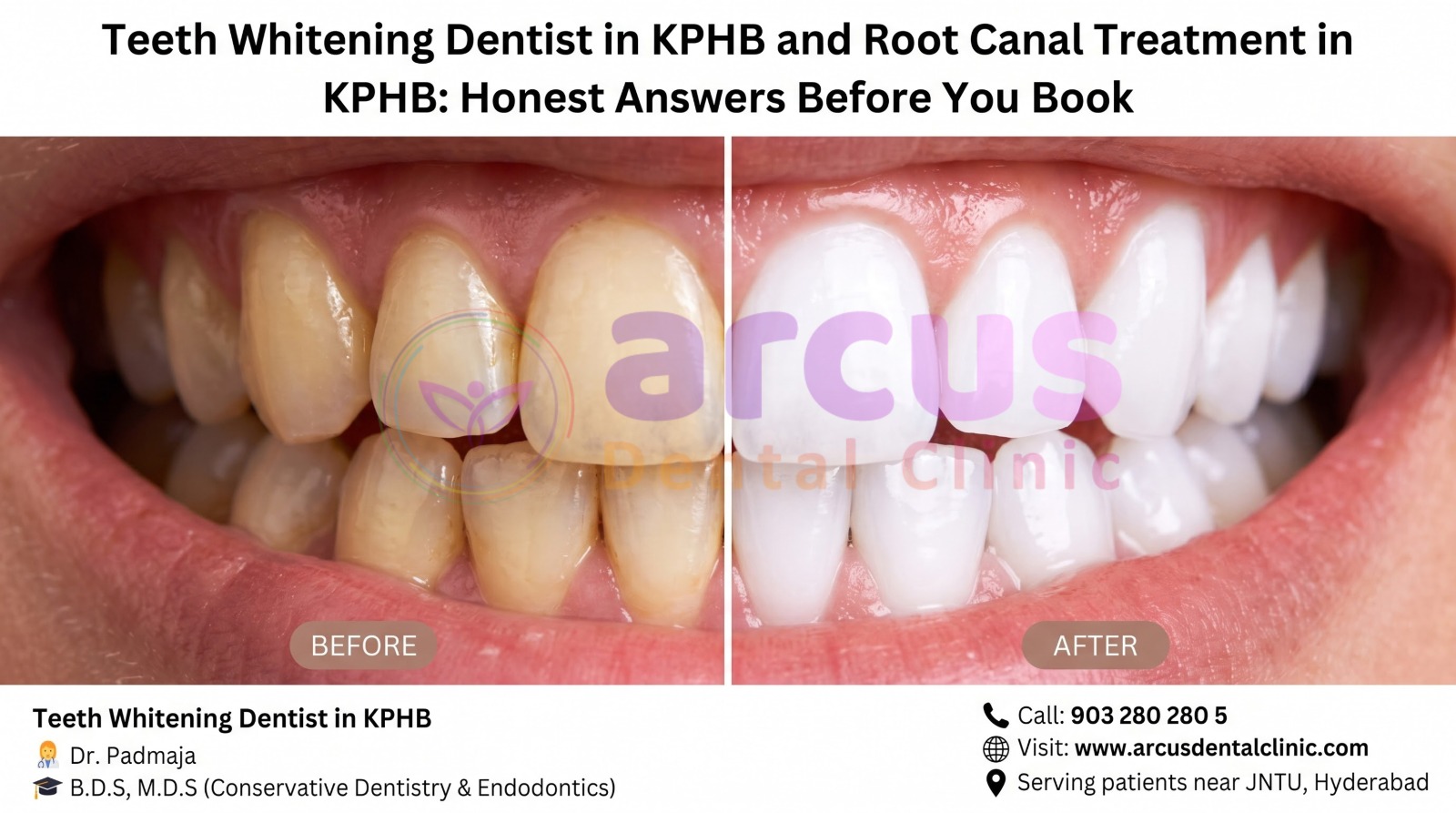
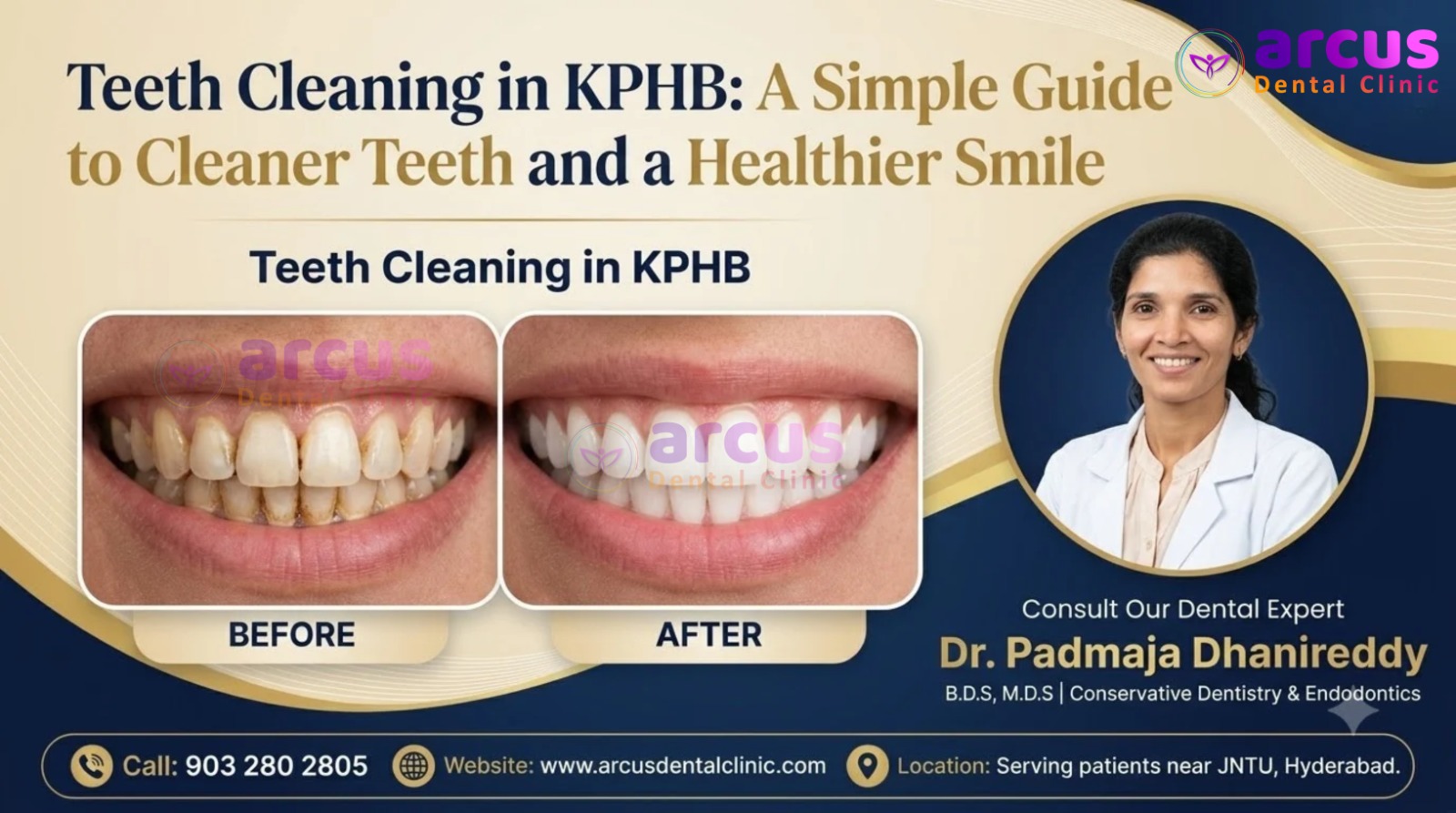
Teeth Whitening Dentist in KPHB is a search many people run after a wedding photo, a job interview or one honest look in the mirror. The market is full of quick fixes, from charcoal powders to strips promising overnight miracles. This guide explains what actually works, what is safe and what to ask before you book with Arcus Dental Clinic, near JNTU, or with any other dentist.
Root Canal Treatment in KPHB
Root Canal Treatment in KPHB is a very different kind of search. It usually starts with a throbbing tooth at night, not a mirror. People often fear the procedure more than the pain itself. We walk you through what a root canal really involves, why it saves teeth and what recovery feels like, so you know what to expect before you sit in the chair.
Part One: Teeth Whitening
Why Teeth Turn Yellow or Dull
Your tooth colour comes from two layers. The outer enamel is slightly see-through and whitish. The layer under it, called dentin, is naturally yellowish. As enamel thins with age or wear, more of the dentin shows through.
Stains fall into two groups.
Surface stains sit on the enamel. Common causes include:
- Chai, coffee, cola and red wine
- Tobacco, gutka and paan
- Strongly coloured foods, such as turmeric-rich curries and dark sauces
- Plaque and tartar that build up when cleaning is poor
Deeper stains form inside the tooth. Causes include:
- Ageing
- Certain antibiotics taken in childhood
- High natural fluoride in drinking water, which can leave white or brown patches on the enamel. Some parts of Telangana are known for this.
- A knock to the tooth that damages the nerve and turns it grey
This matters because the type of stain decides the best treatment. Bleaching works very well on many surface stains. Some deep stains respond slowly, and a few need other solutions, such as veneers.
Whitening Options: What Works and What Doesn’t
In-Clinic Professional Whitening
The dentist protects your gums and lips, then applies a peroxide-based gel to your teeth. It is faster than home methods, and the dentist controls the strength and timing. It suits people who want visible change in a short time.
Dentist-Supervised Take-Home Trays
The dentist makes trays that fit your teeth. You wear them at home with a lower-strength gel, usually for a set number of days or weeks. Results are gradual and even, and they are often gentler on sensitive teeth.
Over-the-Counter Strips and Whitening Toothpastes
These are mild and slow. They can freshen a lightly stained smile, but results are often uneven, especially if your teeth are crowded. Choose products from trusted brands and follow the instructions carefully.
Home Hacks to Skip
- Charcoal powder: it is abrasive and can wear enamel
- Lemon juice: acid softens enamel
- Baking soda scrubbing and salt rubs: too harsh when used often
- Viral whitening pens and pastes with no clear ingredients
Once enamel is worn away, it does not grow back. Whiter teeth are not worth thinner ones.
| Option | Speed | Dentist control | Best for |
| In-clinic whitening | Fastest | High | Events, quick results |
| Supervised take-home trays | Gradual | High | Even results, sensitive teeth |
| Store-bought strips | Slow | None | Light surface stains |
| Home hacks | Unreliable | None | Best avoided |
How to Pick a Teeth Whitening Dentist in KPHB
Whitening looks simple, but doing it well takes a careful start. Here is what a good dentist will do.
- Examine your mouth first. Cavities, cracks, gum disease and exposed roots should be treated before whitening. Bleaching over these can cause pain.
- Clean your teeth first. Tartar and plaque block the gel and cause patchy results.
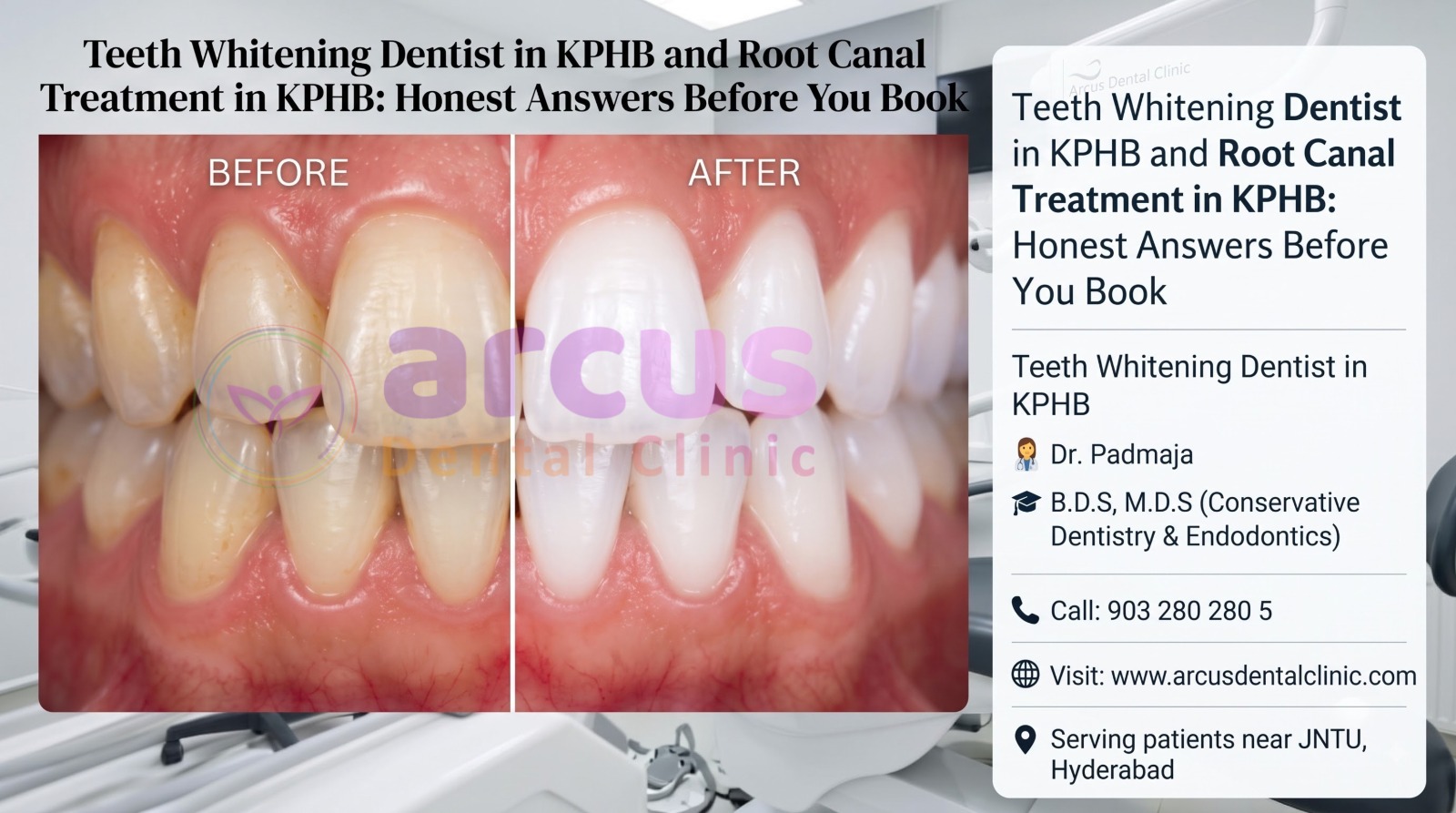
- Record your starting shade. A photo or shade guide lets you see real change.
- Set honest expectations. Not every tooth reaches the same brightness.
- Warn you about restorations. Fillings, crowns and veneers do not change colour with bleaching, so they may look darker next to whitened teeth.
- Explain the sensitivity plan. You should know what to expect and what to do about it.
- Be clear on price. Ask what is included, such as touch-ups or take-home trays.
Be careful with anyone who promises the same shade for everyone, or who skips the check-up and goes straight to the gel.
What Happens at a Whitening Appointment
- Check and clean. The dentist looks at your teeth and gums and cleans off plaque and tartar.
- Shade check. Your starting colour is recorded.
- Your lips and gums are covered so the gel touches only the teeth.
- Gel application. The whitening gel is applied and left for the recommended time.
- Rinse and review. The gel is removed and the new shade is compared with your starting shade.
- Aftercare talk. You get clear instructions on what to eat, drink and use over the next few days.
Timing depends on the method, but a session often takes around an hour.
Sensitivity, Results and Aftercare
Some people feel a mild zing with cold drinks or slight gum irritation for a day or two. This is usually temporary. A desensitising toothpaste often helps. If the sensitivity is strong or lasts longer, tell your dentist.
Results last anywhere from several months to a couple of years, depending on your habits. Tea, coffee and tobacco fade the shade faster.
For the first 48 hours, treat your teeth like a freshly painted wall:
- Skip chai, coffee, cola, red wine and tobacco
- Avoid turmeric-heavy curries, dark sauces and beetroot
- Use a straw for cold drinks
- Rinse with water after anything coloured
- Brush gently with a soft brush
For longer results, brush twice daily, clean between teeth and keep up your six-monthly cleaning. An occasional touch-up keeps the shade even.
Who Should Wait Before Whitening
Whitening is not right for everyone at every moment. Your dentist may advise waiting if you have:
- Untreated cavities or gum disease
- Very sensitive teeth or exposed roots
- Pregnancy or breastfeeding
- A young age where teeth are still developing
- Expectations that go beyond what bleaching can do, such as matching a very bright shade from social media
In some of these cases, another approach such as veneers is better.
Part Two: Root Canal Treatment
Root Canal Treatment in KPHB: What Actually Happens
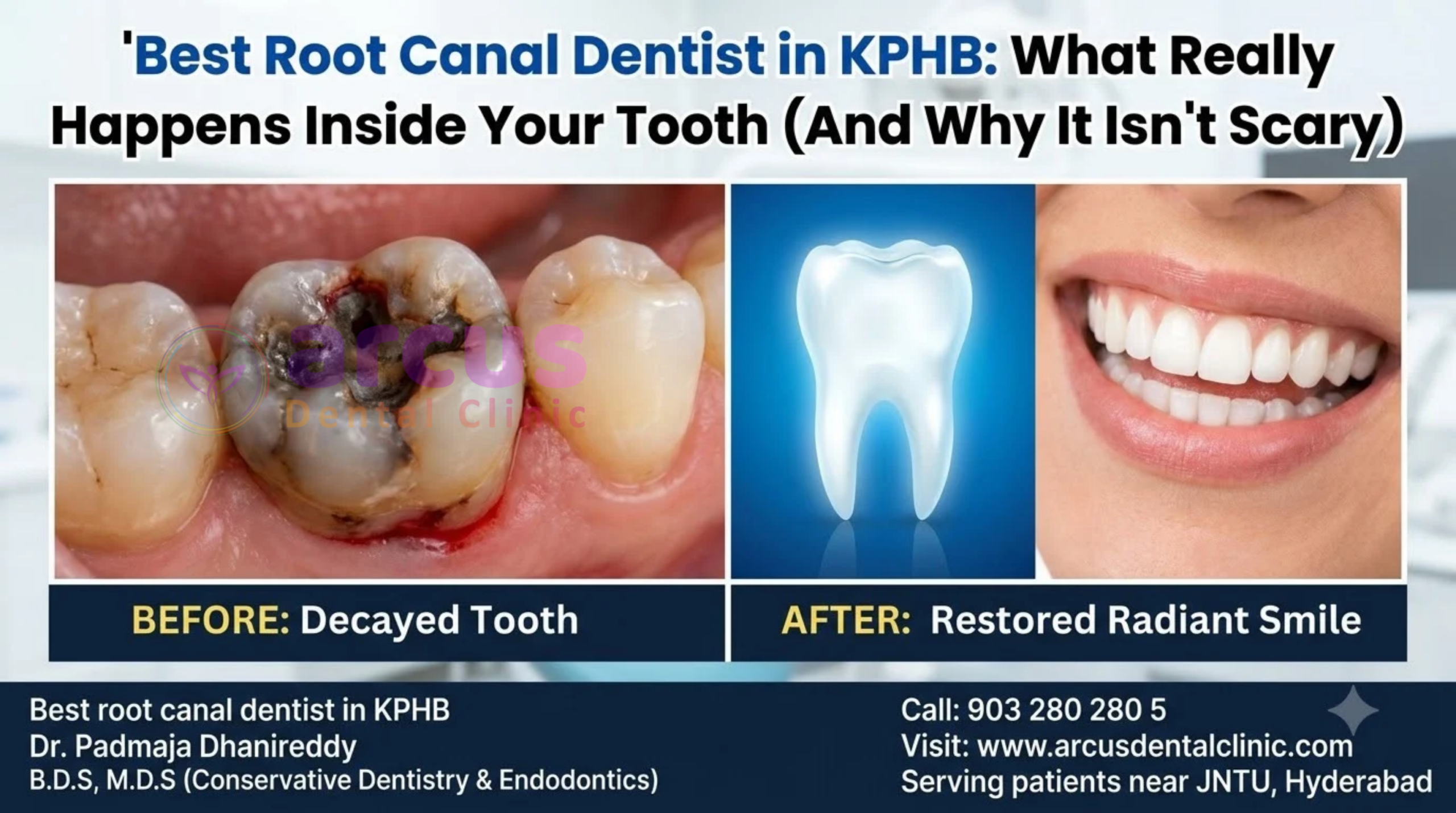
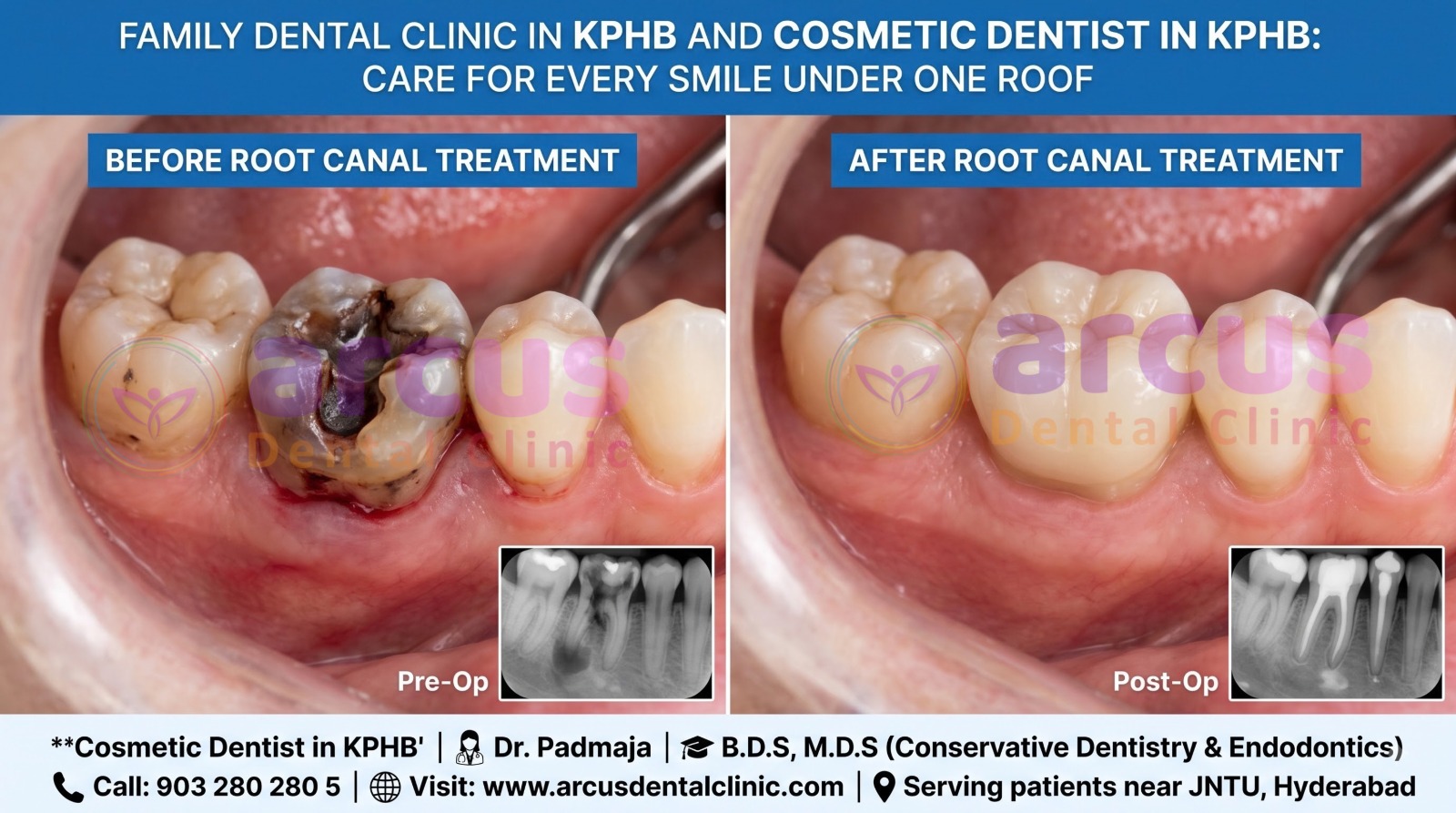
Every tooth has a soft centre called the pulp. It holds nerves and blood vessels and sits inside narrow channels called root canals. When deep decay, a crack or an injury lets bacteria reach the pulp, it becomes inflamed or infected.
Root canal treatment removes the infected pulp, cleans and shapes the inner channels, then seals them. The tooth is then restored with a filling or a crown. The goal is simple: keep your natural tooth instead of pulling it out.
Signs You May Need a Root Canal
- Pain that lingers after hot or cold food is gone
- Sharp pain when you bite or press on the tooth
- Throbbing pain, especially at night
- Swelling on the gum or face
- A small pimple-like bump on the gum
- A tooth that has turned darker than its neighbours
- A very deep cavity
Some infected teeth cause no pain at all. Only an examination and X-ray can confirm what is going on.
Five Root Canal Myths, Cleared Up
“It is very painful.”
The pain comes from the infection, not from the treatment. The tooth is numbed with local anaesthesia, and most people describe it as similar to getting a filling.
“It kills the tooth.”
The nerve inside was already damaged. The tooth stays firmly held in the jaw by the tissues around its root and can work normally for many years.
“Pulling the tooth is easier.”
It may feel quicker, but a missing tooth lets neighbours drift and weakens chewing. Replacing it with a bridge or implant usually takes more time and money than saving the tooth.
“Root canals make you sick.”
This old idea has no solid scientific support. Modern root canal treatment is a well-established and safe procedure.
“Antibiotics can replace it.”
Antibiotics may calm swelling for a while, but they cannot clean the inside of the tooth. The infection returns unless the canal itself is treated.
The Procedure, Step by Step
- The dentist examines the tooth and takes an X-ray.
- Local anaesthesia makes the area comfortable.
- A thin rubber sheet keeps the tooth clean and dry.
- A small opening is made in the top of the tooth.
- Cleaning and shaping. The infected pulp is removed and the canals are cleaned with fine instruments and disinfecting solutions.
- The canals are filled and sealed with a rubber-like material.
- The tooth gets a temporary or permanent filling, and later, if needed, a crown.
Many teeth are finished in one or two visits. Badly infected teeth or teeth with several canals may need more.
Do You Need a Crown Afterwards?
Often, yes, especially for back teeth. A tooth that has lost its pulp and a lot of its structure becomes more brittle, and molars take heavy chewing pressure. A crown protects it from cracking. Front teeth with strong structure sometimes need only a filling.
Do not delay the final restoration. A treated tooth left with only a temporary filling can crack or get reinfected.
Recovery and Aftercare
- Mild soreness for a few days is normal. Your dentist will tell you which pain relief to use.
- Avoid chewing hard food on that side until the final restoration is done.
- Keep brushing and cleaning between your teeth as usual.
- Call your dentist if you notice swelling, fever, worsening pain after a few days, or a bite that feels high.
What Happens If You Wait
Infection does not stay put. It can spread to the bone around the tooth and form an abscess, which brings swelling and severe pain. In time, the tooth may be lost.
If you have facial swelling with fever, or trouble swallowing or breathing, treat it as an emergency and seek urgent care.
Costs vary with the tooth involved, how many canals it has, how infected it is, how many visits are needed and whether a crown follows. Ask for an estimate after the examination, not before.
How Arcus Dental Clinic Approaches Both
Arcus Dental Clinic, led by Dr. Padmaja Dhanireddy and located near JNTU, treats whitening and root canals with the same principle: examine first, explain clearly, then treat.
For whitening, that means checking your teeth and gums before any gel is used, and talking honestly about what result to expect. For a painful tooth, it means finding the cause, explaining your options in plain words and keeping you comfortable through the procedure. You are welcome to ask questions at any point, and no one will rush your decision.
Final Thoughts
A brighter smile and a healthy tooth may sound like different worlds. Both begin the same way: with a careful examination and an honest conversation.
If you have been searching for a teeth whitening dentist in KPHB, look for one who checks your health first and promises only what bleaching can deliver. And if a painful tooth has brought you here, remember that root canal treatment in KPHB is meant to end your pain and save your tooth, not add to it.
Arcus Dental Clinic is near JNTU and welcomes anyone with questions, whether it is about a stained smile or a tooth that will not settle. Book a visit, and take it one step at a time.
Frequently Asked Questions
- How do I find a safe teeth whitening dentist in KPHB?
Choose a dentist who examines your teeth and gums first, cleans them before whitening, records your starting shade and explains the sensitivity risk. Avoid anyone who promises identical results for everyone. - How long do whitening results last?
Anywhere from several months to a couple of years. Tea, coffee, tobacco and poor cleaning shorten results. Good habits and occasional touch-ups extend them. - Does root canal treatment in KPHB hurt?
The tooth is numbed first, so most people feel pressure rather than pain. The severe pain people fear usually comes from the infection, and treatment relieves it. Mild soreness for a few days afterwards is normal. - How many visits does a root canal need?
Many are completed in one or two visits. Infected teeth or teeth with several canals may need more. A crown, if advised, usually follows as a separate visit. - Will whitening change the colour of my fillings, crowns or veneers?
No. Bleaching works only on natural tooth. If your front teeth have fillings or crowns, tell your dentist so they can plan for a matching shade. - What if my toothache goes away on its own?
Do not assume the problem is gone. Pain can stop when the nerve dies, while the infection stays. Get the tooth checked to avoid swelling later.

2 Responses