
Best Dental Root Canal Treatment Clinic in KPHB
Best Dental Root Canal Treatment Clinic in KPHB: Your Complete Guide to Pain-Free Treatment
Are you experiencing severe tooth pain in KPHB and wondering if you need a root canal? Don’t worry – you’re not alone. Thousands of patients visit our Dental Root Canal Treatment Clinic in KPHB every year, and most are surprised to learn that modern root canal treatment is virtually painless and highly successful.
Dental Root Canal Treatment in KPHB
Tooth pain can be one of the most unbearable experiences, often striking at the worst possible moments. Whether it’s a sharp, shooting pain that wakes you up at night or a constant throbbing that makes it impossible to concentrate at work, dental pain significantly impacts your quality of life. In this detailed guide, we’ll walk you through everything you need to know about Dental Root Canal Treatment in KPHB, from understanding when you need it to choosing the right clinic for your care. Our goal is to provide you with complete, accurate information that helps you make informed decisions about your dental health.

What is Root Canal Treatment?
Root canal treatment is a precise dental procedure designed to save severely damaged or infected teeth. To understand why this treatment is necessary, let’s first explore the anatomy of your teeth in detail.
Understanding Tooth Anatomy
Every tooth in your mouth has multiple layers, each serving a specific purpose:
Enamel: This is the outermost layer – the hardest substance in your body, even stronger than bone.
Dentin: When enamel is damaged, hot, cold, or sweet substances can reach the dentin and cause sensitivity.
Pulp: The pulp was essential during tooth development, providing nutrients and forming dentin.
Root Canals: Root canals are tiny openings that run through the tooth roots from the pulp chamber. Depending on its location and purpose, each tooth may require one to four root canals.
When Root Canal Treatment Becomes Necessary
The pulp inside your tooth can become infected or severely damaged for several reasons:
Deep Decay: When cavities are left untreated, bacteria eventually reach the pulp, causing infection and inflammation.
Trauma: A blow to the face, sports injury, or accident can damage the pulp even if there’s no visible crack or chip in the tooth.
Repeated Dental Procedures: Multiple treatments on the same tooth can eventually stress the pulp beyond its ability to heal.
Cracks or Chips: Even small cracks can allow bacteria to enter and infect the pulp.
When the pulp becomes infected or inflamed, it causes severe pain because the pulp is trapped inside the hard walls of your tooth with nowhere for the swelling to go. This pressure on the nerve creates intense, throbbing pain that often worsens with temperature changes or pressure.
The Root Canal Process Explained
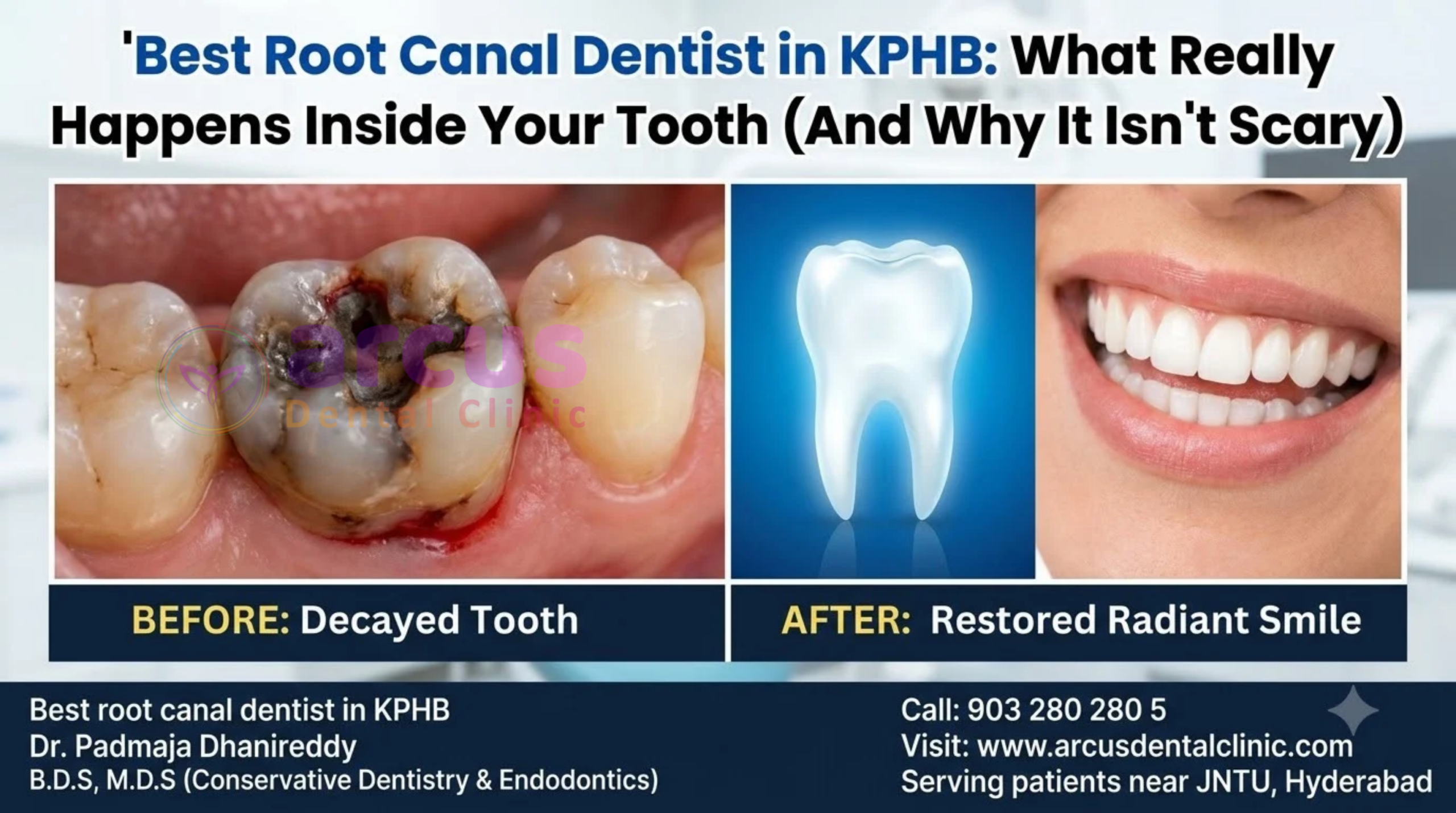
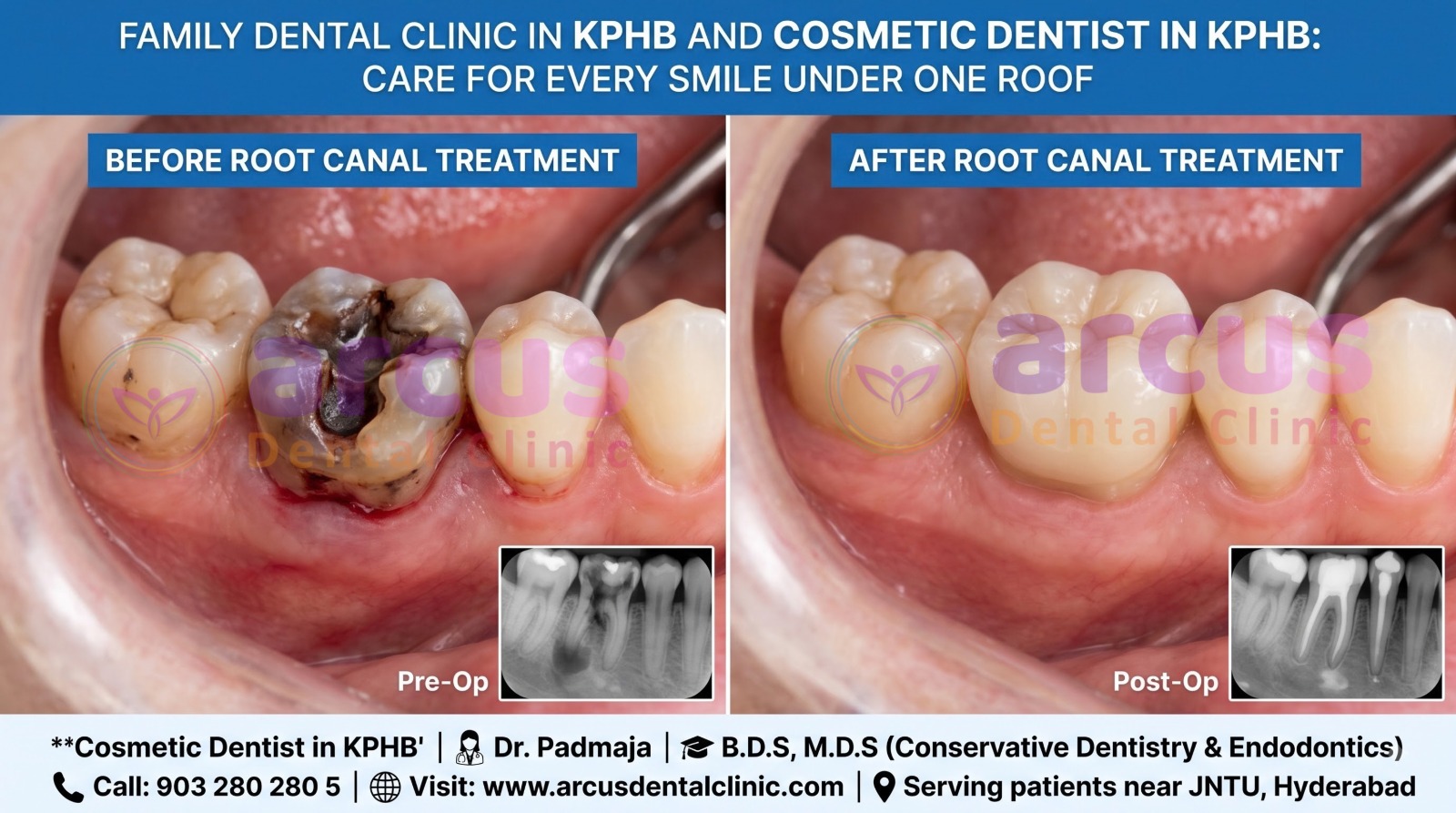
During a root canal procedure, the damaged or infected pulp is carefully removed, the interior of the tooth is completely cleaned and disinfected, and the space is then filled and sealed to stop future infections. Think of it as a very precise cleaning and repair job on the inside of your tooth.
This is far superior to tooth extraction because keeping your natural teeth maintains proper chewing function, prevents adjacent teeth from shifting, and avoids the need for more complex replacement procedures.
When Do You Need Dental Root Canal Treatment in KPHB?
Recognizing when you need Dental Root Canal Treatment in KPHB can help you seek timely care and potentially save your tooth. Here’s a detailed breakdown of symptoms and what they mean.
Severe and Persistent Tooth Pain
Sharp, Shooting Pain: This type of pain often occurs when biting down or applying pressure to the affected tooth. The pain may be so intense that it brings tears to your eyes. It typically indicates that the pulp is severely inflamed or infected.
Throbbing Pain: A constant, rhythmic pain that seems to pulse with your heartbeat often indicates an active infection.
Radiating Pain: Sometimes the pain from an infected tooth can radiate to your ear, jaw, or even down your neck. This happens because nerves in your face and head are interconnected, and inflammation in one area can affect others.
Night Pain: Pain that wakes you up at night or prevents you from falling asleep is a strong indicator of pulp damage. This occurs because lying flat increases blood flow to your head, intensifying the pressure inside the infected tooth.
Temperature Sensitivity Issues
Lingering Cold Sensitivity: While brief sensitivity to cold is normal, prolonged pain after consuming cold foods or drinks (lasting more than a few seconds) suggests pulp damage. Normal teeth may feel momentary sensitivity, but the pain should disappear quickly once the cold stimulus is removed.
Heat Sensitivity: Sensitivity to hot foods and drinks is often more concerning than cold sensitivity. If hot coffee, tea, or soup causes significant pain, this strongly suggests irreversible pulp damage that requires root canal treatment.
Spontaneous Pain: Pain that occurs without any trigger – no hot, cold, or pressure stimulus – indicates advanced pulp damage. This type of pain often comes and goes unpredictably and can be particularly distressing.
Swelling and Physical Changes
Gum Swelling: Swollen, tender, or red gums around a specific tooth often indicate infection spreading from the tooth’s pulp into the surrounding tissues. The swelling may be localized to one area or more widespread.
Facial Swelling: In severe cases, infection can cause swelling in your cheek, jaw, or even around your eye on the affected side. This is a serious condition that requires immediate attention from our Dental Root Canal Treatment Clinic in KPHB.
Pimple on Gums: A small, pus-filled bump on your gums near the affected tooth (called a fistula) is your body’s way of draining infection. While this may temporarily relieve pressure and pain, it indicates a serious infection that needs professional treatment.
Lymph Node Swelling: Tender, swollen lymph nodes under your jaw or in your neck can indicate that your body is fighting a tooth infection.
Color and Appearance Changes
Tooth Discoloration: A tooth that turns gray, black, or dark yellow often indicates that the pulp inside has died. This discoloration occurs because blood and other fluids from the dying pulp seep into the tooth’s structure.
Gum Darkening: The gums around an infected tooth may appear darker than normal due to the infection and reduced blood flow.
Functional Problems
Difficulty Chewing: Pain when biting or chewing, especially on hard foods, can indicate pulp inflammation or damage to the structures supporting your tooth.
Loose Tooth: A tooth that feels loose or mobile may indicate that infection has spread to the periodontal ligament – the tissue that holds your tooth in place.
Systemic Symptoms
Bad Taste or Smell: A persistent metallic taste or foul smell in your mouth, especially when it seems to come from a specific area, can indicate draining infection.
General Malaise: Feeling unwell, tired, or having a low-grade fever can sometimes accompany serious dental infections.
If you’re experiencing any combination of these symptoms in KPHB, it’s crucial to visit our Dental Root Canal Treatment Clinic in KPHB immediately. Early intervention can often mean the difference between saving your tooth and needing extraction.
Why Choose Professional Dental Root Canal Treatment in KPHB? (Technology and Expertise Breakdown)
Choosing the right clinic for your Dental Root Canal Treatment in KPHB is crucial for successful outcomes. Here’s what sets professional treatment apart and why it matters for your health and comfort:
Case Experience: Our specialists at the Dental Root Canal Treatment Clinic in KPHB have extensive experience with:
- Complex cases including retreatments and calcified canals
- Emergency procedures for patients in severe pain
- Pediatric endodontics for children’s unique needs
- Geriatric considerations for elderly patients with medical complications
Step-by-Step: What Happens During Dental Root Canal Treatment in KPHB?
Understanding exactly what happens during your Dental Root Canal Treatment in KPHB can help reduce anxiety and prepare you for the experience. Here’s a comprehensive, step-by-step breakdown:
Pre-Treatment Phase (Before Your Appointment)
Initial Consultation Scheduling: When you call our Dental Root Canal Treatment Clinic in KPHB, our staff will:
- Ask about your symptoms and pain level
- Determine if you need emergency treatment
- Schedule you at the earliest appropriate time
- Provide pre-appointment instructions if needed
- Explain what to bring to your appointment
Preparation Instructions: Before your visit, you may be advised to:
- Take prescribed antibiotics if there’s significant infection
- Use over-the-counter pain relievers as directed
- Avoid extremely hot or cold foods
- Continue normal oral hygiene carefully around the affected area
Step 1: Comprehensive Examination and Diagnosis (30-45 minutes)
Medical History Review: Our specialist will thoroughly review:
- Your current symptoms and when they started
- Previous dental treatments on the affected tooth
- Medical conditions that might affect treatment
- Medications you’re taking that could interact with dental treatment
- Allergies to medications or materials
Clinical Examination: The dentist will carefully examine:
- The affected tooth and surrounding tissues
- Your bite and jaw function
- Signs of swelling or infection
- Response to temperature and pressure tests
- Overall oral health status
Diagnostic Imaging: Multiple X-rays may be taken:
- Periapical X-rays to see the entire tooth and surrounding bone
- Bitewing X-rays to check for decay between teeth
- 3D cone beam CT scans for complex cases requiring detailed imaging
- Comparison with previous X-rays to track changes over time
Treatment Planning Discussion: Your specialist will explain:
- Exact diagnosis and treatment needed
- Alternative treatment options (if any)
- Expected number of appointments
- Detailed cost breakdown
- Post-treatment restoration needs
Step 2: Anesthesia and Patient Comfort (15-20 minutes)
Topical Anesthetic Application:
- Allowed to work for 2-3 minutes
- Ensures injection comfort
Local Anesthesia Administration:
- Infiltration injection for upper teeth, delivered slowly for comfort
- Block injection for lower teeth, numbing the entire quadrant
- Wait time of 10-15 minutes for complete numbness
- Testing to ensure complete anesthesia before beginning
Additional Comfort Measures:
- Nitrous oxide (laughing gas) if requested
- Oral sedation for highly anxious patients
- Blankets and pillows for physical comfort
Step 3: Isolation and Access (10-15 minutes)
Rubber Dam Placement: This crucial step involves placing a small rubber sheet over your tooth:
- Isolates the treatment area from saliva and bacteria
- Protects your throat from instruments and solutions
- Maintains sterility throughout the procedure
- Improves visibility for the dentist
Access Hole Creation:
- Small opening made in the top of your tooth (or back for front teeth)
- High-speed drill with water cooling to prevent heat damage
- Conservative approach to preserve as much tooth structure as possible
Step 4: Pulp Removal and Canal Cleaning (45-90 minutes)
Pulp Tissue Removal:
- Careful extraction to avoid pushing infected material deeper
- Irrigation with antimicrobial solutions throughout
Working Length Determination:
- Confirmatory X-ray to verify measurements
- Documentation of lengths for each canal
Canal Shaping and Cleaning: This is the most critical phase of treatment:
Initial Shaping: Small files are used to create smooth, tapered canals Progressive Enlargement: Gradually larger files shape the canals to proper form Copious Irrigation: Frequent flushing with:
- Sterile saline for final rinse
- Ultrasonic activation to improve solution penetration
Canal Disinfection:
- Multiple irrigation cycles throughout the cleaning process
- Calcium hydroxide medication placed between appointments if needed
- Laser disinfection in some cases for additional sterilization

Step 5: Canal Filling and Sealing (30-45 minutes)
Final Irrigation and Drying:
- Last irrigation cycle to ensure complete cleanliness
- Paper points used to dry canals completely
- Verification that canals are clean and dry
Gutta-Percha Filling:
- Master cone selection – choosing the perfect size for each canal
- Warm vertical compaction technique for dense, complete filling
- Lateral condensation if needed for complex canal anatomy
Confirmatory X-ray:
- Immediate post-treatment X-ray to verify complete filling
- Documentation for your records
- Comparison with pre-treatment images
Step 6: Temporary Restoration and Post-Op Care (15-20 minutes)
Temporary Filling Placement:
- Cavity sealing with temporary filling material
- Bite adjustment to prevent premature contact
- Instructions for care of temporary filling
Post-Treatment Instructions: Detailed explanation of:
- Pain management expectations and medications
- Activity restrictions for the first 24-48 hours
- Diet modifications until permanent restoration
- Warning signs that require immediate attention
- Follow-up appointment scheduling
Between Appointments (If Multiple Visits Required)
Temporary Care Instructions:
- Gentle brushing around the treated area
- Avoid chewing on the treated side
- Take medications as prescribed
- Contact information for emergencies
Step 7: Final Restoration
Evaluation of Healing:
- Symptom assessment – checking for continued pain or sensitivity
- Clinical examination of the treated area
- X-ray evaluation if indicated
Temporary Filling Removal:
- Careful removal without disturbing the root canal filling
- Cleaning of the access cavity
Permanent Restoration Placement:
- Crown preparation for back teeth or severely damaged front teeth
- Composite filling for smaller restorations
- Impression taking for laboratory-made restorations
Final Bite Adjustment:
- Occlusion check to ensure proper bite
- Adjustments as needed for comfort
- Polish of restoration margins
This detailed process ensures that your Dental Root Canal Treatment in KPHB is thorough, comfortable, and successful. Each step is performed with precision and care to give you the best possible outcome.
Value and ROI of Root Canal Treatment
Functional Benefits Worth:
- No dietary restrictions after healing
- Natural appearance maintained
- Speech patterns unaffected
Long-term Financial Benefits:
- Avoiding extraction costs and replacement procedures
- Preventing adjacent tooth problems that could require treatment
- Maintaining proper bite prevents TMJ issues (costly to treat)
- Preserving jawbone avoids need for bone grafts later
Quality of Life Improvements:
- Pain elimination – immediate improvement in daily life
- Confidence restoration – no embarrassment about missing teeth
- Professional appearance maintained
- Social comfort – no worries about dental problems
Our Dental Root Canal Treatment Clinic in KPHB believes that quality dental care should be accessible and affordable. We work with each patient to find payment solutions that fit their budget while providing the highest quality care available.
- What exactly is a root canal treatment?
The dentist cleans out the pulp chamber and root canals, disinfects the area, and then fills and seals the space to prevent further infection. This procedure saves the natural tooth rather than extracting it.
- How painful is a root canal procedure?
Local anesthesia numbs the area completely during the procedure, so patients usually feel only pressure, not pain. Some mild discomfort may occur for a few days afterward, which can be managed with over-the-counter pain medications. The procedure actually relieves the severe pain caused by the infected tooth.
- How long does root canal treatment take to complete? Most root canal treatments require one to three appointments, depending on the complexity of the case. Simple cases may be completed in a single 60-90 minute session, while more complex cases involving multiple roots or severe infections may require 2-3 visits spaced about a week apart.
- What are the alternatives to root canal treatment? The main alternative to root canal treatment is tooth extraction followed by replacement with a dental implant, bridge, or partial denture. However, preserving your natural tooth through root canal therapy is generally preferred because it maintains proper chewing function and prevents adjacent teeth from shifting. Extraction and replacement options are typically more expensive and time-consuming than root canal treatment.
- How successful are root canals, and how long do they last? Root canal treatments have a success rate of 85-97%, depending on the tooth’s condition before treatment. Success depends on factors like following post-treatment care instructions, maintaining good oral hygiene, and having regular dental checkups to monitor the treated tooth’s health.